Kitten Vaccination Schedule: First-Year Health Checklist
Why Vaccinations Are Essential for Every Kitten
Bringing home a kitten is exciting. Those tiny paws, playful zoomies, and endless curiosity can instantly brighten any household. Yet behind all that cuteness lies a vulnerable young immune system that still needs protection against potentially deadly diseases. This is why veterinarians consider vaccinations one of the most important parts of a kitten’s first year of life. Vaccines help prepare a kitten’s immune system to recognize and fight dangerous viruses before exposure occurs. Diseases such as Feline Panleukopenia (FPV), Feline Herpesvirus (FHV-1), Feline Calicivirus (FCV), Feline Leukemia Virus (FeLV), and Rabies can cause severe illness or death, especially in young cats. According to the latest feline vaccination recommendations from the American Animal Hospital Association (AAHA) and the American Association of Feline Practitioners (AAFP), these diseases remain significant threats and are among the most important targets of kitten immunization programs. (AAHA)
Many new cat owners assume indoor kittens face little risk. Unfortunately, viruses can enter homes through contaminated shoes, clothing, visitors, or newly adopted animals. Some infectious diseases are extremely resilient and can survive in the environment for extended periods. Vaccination serves as a protective shield during a kitten’s most vulnerable stage of development. Think of it as building a security system before a break-in occurs. Once disease strikes, treatment can become expensive, stressful, and sometimes unsuccessful. Preventive care is almost always safer, simpler, and more effective.
The first year represents a critical window for building lifelong protection. Missing vaccinations or delaying boosters can leave dangerous gaps in immunity. Understanding the proper schedule allows owners to provide the strongest possible start for their kittens while establishing healthy veterinary care habits that continue into adulthood.
Understanding Core and Non-Core Vaccines
Not every vaccine is the same. Veterinary medicine divides feline vaccines into two major categories: core vaccines and non-core vaccines. Understanding the difference helps owners make informed healthcare decisions while working with their veterinarian.
Core vaccines are recommended for nearly every kitten regardless of lifestyle. Current AAHA and AAFP guidelines identify FHV-1 (Feline Herpesvirus Type 1), FCV (Feline Calicivirus), FPV (Feline Panleukopenia Virus), Rabies, and FeLV for cats under one year of age as essential vaccines. These diseases either occur widely, pose significant health risks, or present public health concerns in the case of rabies. (AAHA)
Non-core vaccines, on the other hand, depend on exposure risk. Factors such as outdoor access, multi-cat households, geographic location, travel plans, and contact with unknown animals influence whether additional protection is needed. Examples may include vaccines for Bordetella bronchiseptica or Chlamydia felis in specific situations. (AAHA)
| Vaccine | Category | Recommended For |
|---|---|---|
| FVRCP (FHV-1, FCV, FPV) | Core | All kittens |
| Rabies | Core | All kittens where legally required |
| FeLV | Core under 1 year | Most kittens |
| Bordetella | Non-Core | High-risk environments |
| Chlamydia felis | Non-Core | Specific risk situations |
The purpose of this system is personalization. Veterinary medicine has moved away from a one-size-fits-all approach. Instead, vaccination plans are tailored to individual risk factors. This ensures kittens receive appropriate protection without unnecessary treatments. Working closely with your veterinarian helps determine which vaccines are most beneficial for your specific kitten and lifestyle.
The Science Behind Kitten Immunity
One of the biggest reasons kitten vaccination schedules involve multiple doses is something called maternal antibody interference. Understanding this concept explains why a single vaccine appointment is rarely enough.
When kittens are born, they receive protective antibodies from their mother’s first milk, known as colostrum. These antibodies provide temporary immunity against many infectious diseases during early life. While this natural protection is valuable, it also creates a challenge. Maternal antibodies can block vaccines from working properly if administered too early. AAHA guidelines explain that these antibodies decline at different rates in different kittens, creating what veterinarians call a “window of susceptibility.” During this period, maternal protection weakens while vaccine protection may not yet be fully established. (AAHA)
This uncertainty is exactly why kittens receive a series of vaccinations rather than a single injection. By administering boosters every few weeks, veterinarians increase the likelihood that at least one vaccine dose occurs after maternal antibodies have dropped low enough for the immune system to respond effectively. Current recommendations often continue boosters until approximately 16–20 weeks of age to ensure reliable immunity. (AAHA)
Think of maternal antibodies as temporary training wheels. They provide initial support but eventually need to come off. Vaccinations teach the kitten’s own immune system how to ride independently. The timing must be carefully managed to avoid losing protection while transitioning from maternal immunity to lifelong immune memory.
This scientific principle explains why booster appointments are not optional extras. Each vaccine dose plays a specific role in building a strong and durable defense against disease.
Kitten Vaccination Schedule by Age
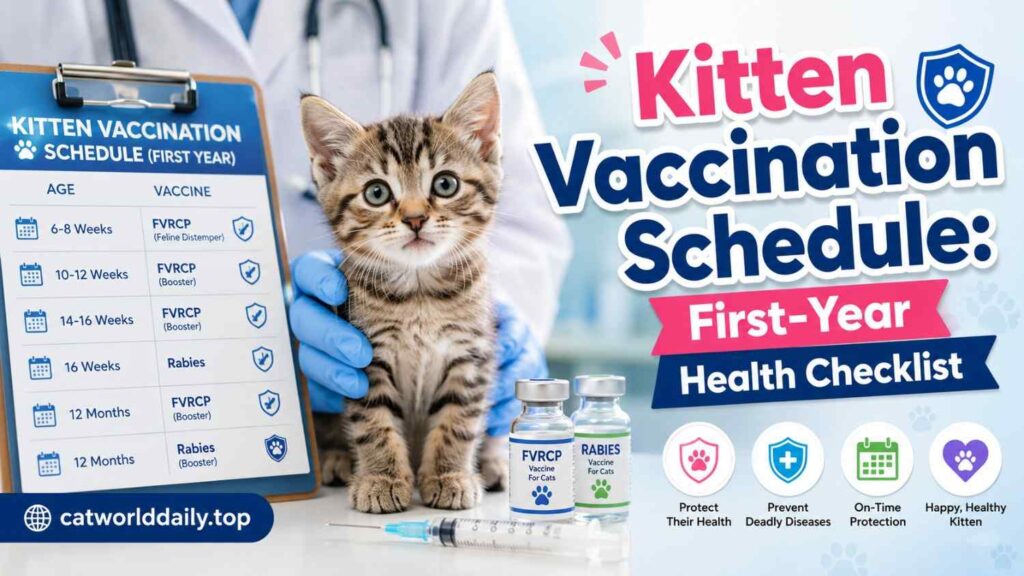
The first-year vaccine schedule follows a carefully designed timeline based on immune system development. While exact recommendations may vary slightly between veterinarians and regions, modern feline vaccination guidelines generally follow a similar structure. (AAHA)
Recommended First-Year Vaccination Timeline
| Age | Recommended Vaccines |
|---|---|
| 6–8 Weeks | First FVRCP Vaccine |
| 10–12 Weeks | FVRCP Booster + FeLV (if indicated) |
| 14–16 Weeks | Final FVRCP Booster + Rabies + FeLV Booster |
| 6 Months | FVRCP Revaccination (in some protocols) |
| 12 Months | First Annual Booster |
According to current AAHA feline vaccination schedules, kittens generally begin receiving FVRCP vaccinations around 6–8 weeks of age. Additional boosters follow every 3–4 weeks until at least 16 weeks, and sometimes as late as 20 weeks depending on risk factors and veterinary guidance. FeLV vaccination is commonly included for kittens because younger cats are particularly susceptible to infection. Rabies vaccination timing depends on local regulations and vaccine labeling requirements. (AAHA)
Many owners become confused when different veterinarians recommend slightly different schedules. The reason often relates to vaccine brands, local disease prevalence, and individual risk assessments. The most important principle is completing the full series rather than focusing exclusively on exact dates. Missing boosters can leave significant gaps in protection.
Viewing the schedule as a roadmap rather than a single destination helps. Each visit builds upon previous protection until a complete immune defense system is established.
Complete First-Year Health Checklist
Vaccinations are only one part of a kitten’s healthcare journey. The first year also includes parasite prevention, growth monitoring, nutritional management, and routine wellness examinations. Together, these elements create a comprehensive health foundation.
AAHA’s feline life-stage recommendations emphasize regular physical examinations, parasite assessments, fecal testing when appropriate, year-round parasite prevention, and nutritional monitoring during kittenhood. (AAHA)
A practical first-year checklist often includes:
- Vaccination series completion
- Routine deworming
- Flea prevention
- Tick prevention where applicable
- Weight monitoring
- Dental evaluations
- Nutrition reviews
- Behavioral assessments
- Microchipping
- Spay or neuter consultation
Growth monitoring deserves special attention. Kittens develop rapidly during their first year, and regular weight checks help identify potential nutritional or health concerns. Proper nutrition supports immune system development, muscle growth, organ function, and healthy brain development. Feeding a high-quality kitten diet specifically formulated for growth is generally recommended.
Parasite control is equally important. Even indoor-only kittens can encounter fleas, intestinal worms, and other parasites. Veterinary guidelines increasingly recommend year-round prevention strategies tailored to individual risk levels. (AAHA)
The first year can feel overwhelming for new owners. Breaking healthcare into manageable milestones makes the process much easier while ensuring important preventive measures are not overlooked.
Spaying, Neutering, and Microchipping
Vaccination appointments often overlap with discussions about spaying, neutering, and permanent identification. These procedures play a major role in responsible pet ownership and long-term health management.
Many veterinarians recommend spaying or neutering around 4–6 months of age, although timing may vary depending on breed, health status, and veterinary preference. These procedures help prevent unwanted litters while reducing certain reproductive diseases and behavioral challenges. Early discussions allow owners to plan appropriately and schedule surgery at the optimal time.
Microchipping is another essential consideration. Unlike collars, which can break or be removed, microchips provide permanent identification. A tiny chip inserted beneath the skin contains a unique identification number linked to owner contact information. If a kitten becomes lost, shelters and veterinary clinics can scan the chip and help facilitate reunification.
The emotional value of microchipping becomes obvious when pets disappear unexpectedly. Indoor cats can slip through doors, escape during moves, or become frightened by loud noises. A microchip significantly increases the chances of recovery.
Combining vaccination visits with broader preventive care discussions creates a more complete healthcare strategy. Rather than viewing each service separately, veterinarians increasingly emphasize integrated wellness plans that address all aspects of feline health during the first year.
Indoor vs Outdoor Kitten Vaccine Needs
A common question among cat owners is whether indoor kittens need the same vaccines as outdoor kittens. While lifestyle certainly influences risk assessment, the answer may surprise many people.
Current veterinary recommendations emphasize that core vaccines remain important even for indoor-only cats. Diseases such as panleukopenia can enter homes indirectly through contaminated objects, people, or other animals. Rabies vaccination may also be legally required regardless of lifestyle. (AAHA)
Outdoor access does increase exposure risks substantially. Cats that spend time outside may encounter infected animals, wildlife, parasites, contaminated environments, and physical injuries. These factors often influence decisions regarding FeLV vaccination and other preventive measures.
| Risk Factor | Indoor Cat | Outdoor Cat |
|---|---|---|
| Panleukopenia Exposure | Possible | Higher |
| FeLV Exposure | Lower | Higher |
| Parasite Risk | Moderate | High |
| Rabies Exposure | Lower | Higher |
| Injury Risk | Lower | High |
The distinction isn’t simply indoor versus outdoor. Multi-cat households, foster situations, rescue work, travel, boarding facilities, and neighborhood cat populations all contribute to overall risk. Veterinary professionals perform individualized risk assessments to determine appropriate vaccination strategies.
Assuming indoor cats require no vaccines can create dangerous vulnerabilities. Preventive medicine works best when based on realistic risk evaluation rather than assumptions.
Common Vaccine Side Effects
Most kittens tolerate vaccinations extremely well. Serious reactions are uncommon, but owners should understand what normal post-vaccination responses look like.
Mild side effects may include temporary sleepiness, reduced activity, decreased appetite, mild soreness at the injection site, or slight fever. These reactions typically resolve within a day or two as the immune system responds to the vaccine. Such responses are generally considered normal and indicate that immune stimulation is occurring.
Veterinarians advise monitoring kittens after vaccination appointments and contacting the clinic if severe symptoms develop. Signs such as facial swelling, difficulty breathing, persistent vomiting, collapse, or extreme lethargy require immediate medical attention.
It’s important to maintain perspective. The risks associated with vaccine-preventable diseases are generally far greater than the risks associated with vaccination itself. AAHA emphasizes that vaccination remains one of the most effective preventive healthcare measures available for feline patients. (AAHA)
Understanding potential side effects reduces anxiety while helping owners distinguish normal immune responses from situations requiring veterinary evaluation.
First-Year Vet Visit Timeline
A kitten’s first year often involves multiple veterinary appointments. Rather than viewing these visits as isolated events, it helps to see them as chapters in a coordinated healthcare plan.
Initial appointments focus heavily on physical examinations, vaccination planning, parasite control, nutrition discussions, and baseline health assessments. Follow-up visits monitor growth, administer booster vaccines, and address emerging questions about behavior, training, and development.
By six months, conversations frequently shift toward spaying or neutering, lifestyle management, and long-term preventive care. The twelve-month appointment often marks the transition from kittenhood to adult wellness programs.
AAHA life-stage recommendations encourage comprehensive annual assessments that include vaccination reviews, parasite risk evaluation, nutritional guidance, and overall health monitoring. (AAHA)
Regular veterinary care offers benefits beyond disease prevention. Early detection of congenital issues, nutritional concerns, developmental abnormalities, and behavioral challenges can significantly improve long-term outcomes. Establishing a relationship with a trusted veterinarian during kittenhood also creates continuity of care throughout adulthood.
The healthiest adult cats often begin with consistent preventive care during their first year.
Common Vaccination Mistakes to Avoid
Even well-intentioned owners sometimes make mistakes that compromise vaccine effectiveness. Understanding these pitfalls helps ensure optimal protection.
One of the most common mistakes is skipping booster appointments. Because maternal antibodies interfere with immunity development, incomplete vaccine series may leave kittens vulnerable despite receiving one or two injections. Completing the entire schedule is essential. (AAHA)
Another mistake involves assuming indoor cats don’t require vaccination. As discussed earlier, exposure pathways exist even within apparently secure environments. Core vaccines remain important regardless of lifestyle.
Some owners delay veterinary visits because their kitten appears healthy. Unfortunately, preventive medicine works best before problems become visible. Waiting until illness develops often eliminates opportunities for prevention.
Relying solely on internet advice can also create confusion. While online resources provide useful background information, vaccination recommendations should always be individualized by a licensed veterinarian familiar with local disease risks and the kitten’s specific circumstances.
The goal isn’t perfection. It’s consistency. Following professional guidance, maintaining scheduled appointments, and completing recommended booster series provide the strongest foundation for lifelong feline health.
Conclusion
The first year of a kitten’s life is a remarkable period of growth, learning, and development. It is also the most important time for establishing protection against potentially life-threatening diseases. Current AAHA and AAFP recommendations identify FVRCP, Rabies, and FeLV as key components of kitten vaccination programs, with boosters strategically timed to overcome maternal antibody interference and build reliable immunity. (AAHA)
Vaccination, however, is only one piece of the puzzle. Parasite prevention, proper nutrition, routine veterinary examinations, microchipping, and spaying or neutering all contribute to long-term health and well-being. Together, these preventive measures form a comprehensive first-year health checklist that supports healthy development and reduces future risks.
By staying proactive and partnering closely with a veterinarian, cat owners can provide their kittens with the strongest possible start in life. Those early investments in preventive care often pay dividends for many years to come.
FAQs
1. When should a kitten get its first vaccine?
Most kittens receive their first FVRCP vaccination between 6 and 8 weeks of age, although timing may vary depending on veterinary recommendations and individual circumstances. (AAHA)
2. How many vaccine boosters does a kitten need?
Kittens typically receive booster vaccinations every 3–4 weeks until approximately 16–20 weeks of age to ensure protection after maternal antibodies decline. (AAHA)
3. Does an indoor kitten need vaccines?
Yes. Veterinary guidelines recommend core vaccines for indoor cats because infectious diseases can still enter homes indirectly. (AAHA)
4. Is FeLV vaccination necessary for kittens?
Current AAHA/AAFP guidelines consider FeLV vaccination a core recommendation for cats younger than one year old, regardless of lifestyle. (AAHA)
5. What happens if my kitten misses a booster shot?
Missing boosters may leave gaps in immunity. Contact your veterinarian promptly to determine the appropriate catch-up schedule for your kitten. (AAHA)

The Cat World Daily Editorial Team is dedicated to providing accurate, practical, and research-based information about cat care, nutrition, health, behavior, and products.