Human Foods Cats Can and Cannot Eat: Full Safety List
Understanding a Cat’s Dietary Needs
Why Cats Are Obligate Carnivores
Cats aren’t just picky eaters—they’re biologically wired to thrive on meat. Unlike humans or even dogs, cats are obligate carnivores, meaning their bodies depend on nutrients found almost exclusively in animal tissues. Think of their diet like a high-performance engine that runs best on premium fuel—protein. Without it, their systems simply don’t function properly.
Cats require specific nutrients like taurine, arachidonic acid, and vitamin A in forms only found in animal products. While humans can convert plant-based nutrients into usable forms, cats lack that ability. That’s why feeding them a vegetarian or heavily plant-based diet can lead to serious health issues over time. It’s not just about preference—it’s survival.
Another key point is digestion. Cats have shorter digestive tracts designed to process meat quickly, not break down complex carbohydrates or fibrous plant materials. So when you offer your cat human food, you’re not just sharing a snack—you’re potentially disrupting a finely tuned biological system.
How Human Food Affects Cats
It’s tempting to share your meals with your furry companion, especially when they give you that irresistible look. But here’s the catch: not all human foods are created equal for cats. Some can be beneficial in small amounts, while others can be outright toxic.
Human foods often contain salt, spices, oils, and additives that a cat’s body simply isn’t built to handle. Even something as harmless as a seasoned piece of chicken can cause digestive upset. Over time, regularly feeding inappropriate human foods can lead to obesity, diabetes, or kidney problems.
So before you toss your cat a bite from your plate, it’s worth asking: is this actually safe for them? A little awareness goes a long way in keeping your cat healthy and happy.
Safe Human Foods for Cats
Protein-Rich Foods Cats Can Eat
Cooked Meats and Fish
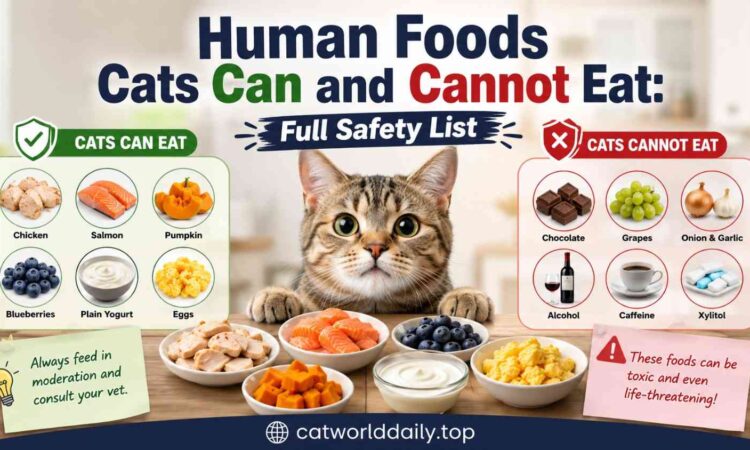
If there’s one category of human food that aligns well with a cat’s natural diet, it’s lean, cooked protein. Chicken, turkey, beef, and lamb are all excellent choices when prepared properly. The key here is simplicity—no seasoning, no sauces, and definitely no bones.
Cooked fish like salmon or tuna can also be a great treat, packed with omega-3 fatty acids that support skin and coat health. However, moderation is crucial. Too much fish can lead to nutrient imbalances or even mercury exposure in the long run.
Imagine protein as the foundation of your cat’s nutritional pyramid. Everything else is secondary. When offering human food, sticking to plain, cooked meats ensures you’re giving your cat something both safe and beneficial.
Vegetables Cats Can Eat
You might be surprised, but some vegetables can actually be safe for cats. Options like carrots, peas, green beans, and pumpkin can provide fiber and help with digestion. They’re especially useful if your cat struggles with constipation or hairballs.
That said, vegetables should only play a minor role in your cat’s diet. Think of them as a side dish rather than the main course. Cats don’t derive much nutritional value from plants, so overfeeding veggies can displace more important nutrients.
Preparation matters too. Always cook vegetables until soft and serve them plain. Raw veggies can be hard to digest and may even pose a choking hazard.
Fruits Safe for Cats
Fruits are not a natural part of a cat’s diet, but some can be offered in tiny amounts as an occasional treat. Apples (without seeds), bananas, and blueberries are generally safe and can provide a small boost of vitamins.
However, many cats won’t show much interest in fruits—and that’s perfectly normal. Their taste receptors are different from ours, and they don’t crave sweetness the way humans do.
When offering fruit, keep portions extremely small. A bite-sized piece is more than enough. Too much sugar, even from natural sources, can contribute to weight gain and other health issues.
Grains and Carbohydrates
Grains like rice and oats are sometimes included in commercial cat foods, and they can be safe in small amounts. They’re particularly useful if your cat has an upset stomach, as plain rice can be gentle on digestion.
Still, cats don’t need carbohydrates in their diet. Their bodies are designed to get energy from protein and fat, not carbs. So while grains aren’t harmful in moderation, they shouldn’t become a regular part of your cat’s meals.
Foods Cats Can Eat Occasionally
Dairy Products
The classic image of a cat lapping up milk is a bit misleading. While kittens can digest lactose, most adult cats are lactose intolerant. This means milk and other dairy products can cause stomach upset, including diarrhea and bloating.
That doesn’t mean all dairy is off-limits. Small amounts of cheese or plain yogurt can be tolerated by some cats. The key is moderation and observation—if your cat shows any signs of discomfort, it’s best to avoid dairy altogether.
Processed Human Foods
Some processed foods like plain bread or cooked pasta are not toxic, but they offer little to no nutritional value for cats. Feeding these regularly is like giving your cat empty calories—it fills them up without providing the nutrients they need.
Occasional bites won’t cause harm, but they shouldn’t become a habit. Your cat’s diet should always prioritize nutrient-dense foods.
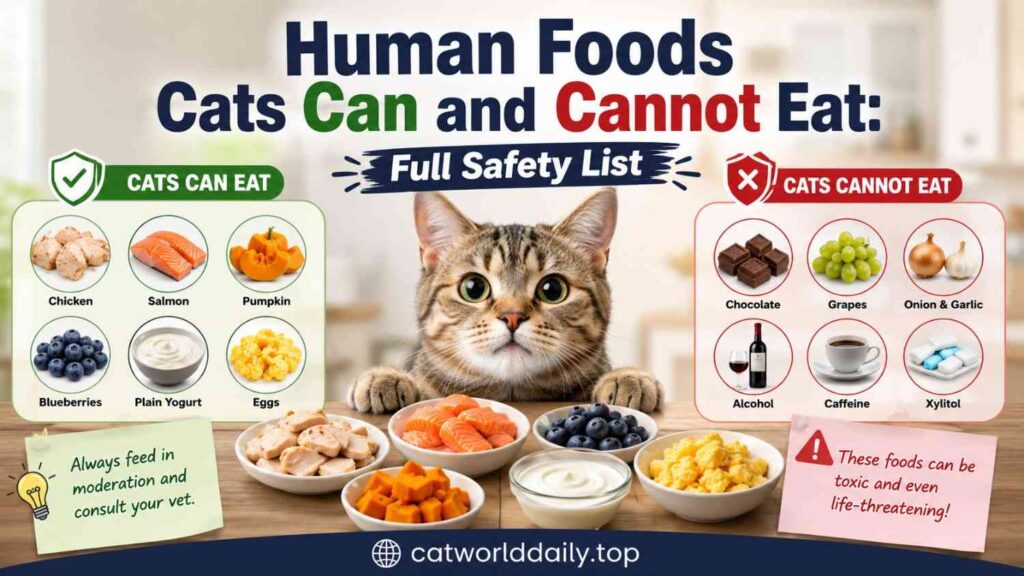
Toxic Foods Cats Must Avoid
Common Kitchen Dangers
Onions, Garlic, and Spices
Onions, garlic, and related ingredients are among the most dangerous foods for cats. They contain compounds that can damage red blood cells, leading to anemia. Even small amounts, whether raw, cooked, or powdered, can be harmful.
Spices and seasonings, while not always toxic, can irritate a cat’s digestive system and should be avoided entirely.
Sweet and Processed Hazards
Chocolate is a well-known toxin for pets, and cats are no exception. It contains theobromine, which can affect the heart and nervous system. Similarly, artificial sweeteners like xylitol are extremely dangerous and can cause severe reactions.
Sugary foods, in general, should be avoided. Cats don’t need sugar, and consuming it can lead to obesity and diabetes.
Dangerous Drinks
Alcohol and caffeine are absolute no-go zones. Even a small amount of alcohol can be life-threatening for a cat, affecting their liver and brain. Caffeinated drinks like coffee and tea can overstimulate their nervous system, leading to serious health issues.
Risky Foods That Aren’t Fully Toxic
Raw Foods
Raw meat and fish may seem natural, but they can carry harmful bacteria like salmonella or E. coli. There’s also a risk of parasites. Cooking food eliminates these dangers, making it a safer option for your cat.
Bones and Fatty Scraps
Bones, especially cooked ones, can splinter and cause choking or internal injuries. Fatty scraps, while tempting to share, can lead to pancreatitis—a painful and potentially serious condition.
Comparison Table: Safe vs Unsafe Foods
| Category | Safe Foods | Unsafe Foods |
|---|---|---|
| Protein | Cooked chicken, turkey | Raw meat, bones |
| Vegetables | Carrots, peas | Onions, garlic |
| Fruits | Apples (no seeds), bananas | Grapes, raisins |
| Dairy | Small cheese amounts | Milk (in excess) |
| Drinks | Water | Alcohol, caffeine |
Signs Your Cat Ate Something Dangerous
Cats are masters at hiding discomfort, which makes it tricky to spot when something’s wrong. However, there are some warning signs you should never ignore. Vomiting, diarrhea, lethargy, and loss of appetite are common indicators that your cat may have ingested something harmful.
In more severe cases, you might notice tremors, difficulty breathing, or unusual behavior. These symptoms require immediate veterinary attention. Time is critical when dealing with toxic ingestion, so don’t wait and see if things improve.
How to Safely Introduce Human Food
If you’re considering adding human food to your cat’s diet, start slow. Introduce one food at a time and monitor your cat’s reaction. This makes it easier to identify any sensitivities or allergies.
Always keep portions small. Human food should never make up more than 10% of your cat’s daily intake. Think of it as a treat, not a replacement for balanced cat food.
Expert Tips for Feeding Cats
Feeding your cat properly doesn’t have to be complicated, but it does require some awareness. Stick to high-quality commercial cat food as the primary diet, and use human food sparingly.
Avoid feeding from the table, as this can encourage begging behavior. Instead, offer treats in a controlled manner. And when in doubt, consult your veterinarian before introducing new foods.
Conclusion
Feeding your cat human food can be a great way to bond, but it comes with responsibility. Understanding what’s safe and what’s dangerous is essential for your pet’s health. By sticking to simple, unseasoned foods and avoiding toxic ingredients, you can safely share the occasional treat without putting your cat at risk.
FAQs
1. Can cats eat rice every day?
No, rice should only be given occasionally. Cats don’t need carbohydrates in their daily diet.
2. Is tuna safe for cats daily?
Tuna is safe in small amounts but not daily due to potential mercury buildup.
3. Can cats drink milk?
Most adult cats are lactose intolerant, so milk can cause digestive issues.
4. What happens if a cat eats chocolate?
Chocolate is toxic and can cause serious health problems, including heart issues.
5. Are fruits necessary for cats?
No, fruits are not necessary and should only be given as rare treats.

The Cat World Daily Editorial Team is dedicated to providing accurate, practical, and research-based information about cat care, nutrition, health, behavior, and products.