



Bringing home a tiny kitten feels a bit like welcoming a furry tornado into your life. One minute they are sleeping peacefully in your lap, and the next they are climbing curtains like tiny jungle explorers. But alongside all the excitement comes a big question every new pet parent asks: What should I feed my kitten? Getting this right matters more than many people realize. During the first year of life, kittens grow at an incredible speed, building bones, muscles, organs, and immune defenses that will shape their health for years to come. Feeding them properly is like laying a strong foundation for a house—if the base is solid, everything else stands stronger.
Veterinary nutrition experts explain that kittens require significantly more calories, protein, and fat than adult cats because of their rapid growth and high energy levels. According to recent veterinary feeding guidance, kittens may need up to twice as many calories per pound as adult cats, especially during the first six months of life. This means feeding your kitten isn’t simply about filling a bowl and hoping for the best. It involves choosing the right food for their age, understanding portion sizes, and avoiding foods that can quietly harm their development. In this complete guide, you will learn exactly what to feed a kitten by age, how often to feed them, what foods to avoid, and practical tips that make feeding easier for both you and your tiny feline companion.
Why Feeding a Kitten Correctly Matters
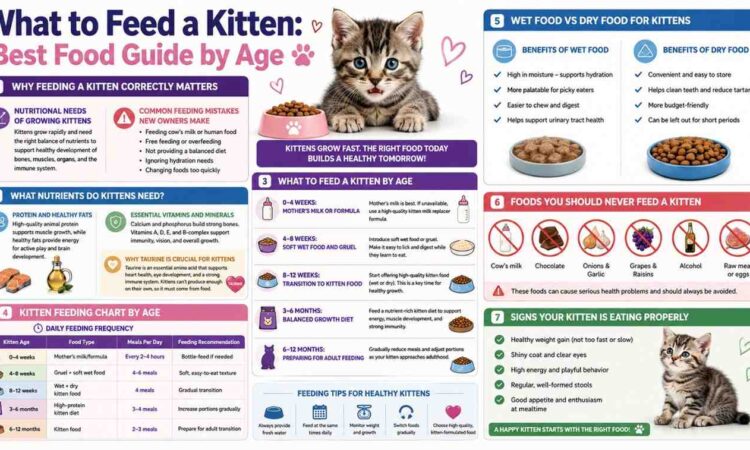
Feeding a kitten properly is one of the most important jobs a cat owner has. Think about how much changes in the first year of a kitten’s life. They go from tiny newborns who fit in the palm of your hand to energetic little athletes sprinting across your house at lightning speed. That transformation requires serious nutritional support. Unlike adult cats who mainly eat to maintain body condition, kittens eat to grow. Every bite contributes to stronger muscles, healthier bones, sharper eyesight, brain development, and a stronger immune system.
Many new cat owners make the mistake of treating kittens like miniature adult cats. It sounds harmless, but adult cat food simply does not provide the same nutritional density growing kittens need. Kitten food contains higher protein, fat, calories, and essential nutrients specifically formulated to support rapid development. Experts from veterinary nutrition organizations frequently emphasize that kittens need food labeled “complete and balanced for growth” to meet their developmental needs. Without proper nutrition, kittens may experience slower growth, weaker immunity, poor coat condition, or digestive issues.
Feeding is also about routine and confidence. Imagine trying to build muscle at the gym while eating random meals with no structure—it would be difficult, right? Kittens thrive on predictable feeding schedules because their small stomachs empty quickly. Regular meals help stabilize energy levels and reduce digestive stress. A kitten who eats the right food consistently often grows into a healthier, happier adult cat with fewer nutritional problems later in life.
Nutritional Needs of Growing Kittens
Kittens are basically tiny eating machines disguised as adorable fluff balls. They need an impressive amount of fuel for their size. Protein sits at the center of a healthy kitten diet because cats are obligate carnivores, meaning they biologically depend on animal-based nutrients to survive and thrive. A kitten’s diet should include high-quality meat protein sources like chicken, turkey, salmon, or beef. Protein supports muscle development, tissue repair, and healthy organ growth.
Healthy fats are equally important because they act like concentrated fuel. Ever wonder why kittens seem to have endless energy? Fat provides much of that energy while also supporting brain and vision development. Nutrients such as omega-3 fatty acids, especially DHA, are commonly highlighted by veterinarians as beneficial during early growth stages. Vitamins and minerals like calcium and phosphorus also help strengthen bones and teeth, which are rapidly developing during kittenhood.
One nutrient deserves special attention: taurine. Cats cannot produce enough taurine naturally, so they must get it through food. Without adequate taurine, kittens risk serious issues affecting the heart, eyesight, and overall development. That is one major reason feeding random homemade meals or dog food can become dangerous. High-quality commercial kitten food is specifically designed to include the nutrients kittens cannot safely go without.
Common Feeding Mistakes New Owners Make
Even the most caring kitten owners can make feeding mistakes, especially during those exciting first weeks of bringing a kitten home. It is completely normal to feel unsure because kittens are tiny, constantly hungry, and seem to change overnight. One of the biggest mistakes is feeding food meant for adult cats too early. Adult cat food lacks the calorie density and nutrient balance growing kittens require. Imagine trying to fuel a growing child using a strict low-calorie diet designed for adults—it simply would not work. Kittens need extra protein, fats, and specific nutrients to support healthy development.
Another surprisingly common mistake is giving cow’s milk to kittens. Cartoons have convinced many people that cats love milk, but reality tells a different story. Most kittens struggle to digest cow’s milk properly because of lactose, which can trigger stomach upset, diarrhea, and dehydration. If a newborn kitten cannot nurse from its mother, a kitten milk replacer formula is the safer option recommended by veterinarians. Hydration also matters more than many people realize. Since kittens are energetic and fast-growing, dehydration can happen quickly, especially in warm weather or during digestive upset.
Overfeeding treats is another trap new owners fall into. Those adorable kitten eyes can be dangerously convincing. A few treats seem harmless, but too many can upset nutritional balance and reduce appetite for proper meals. Think of treats like candy for children—fun in moderation but not something that should replace balanced meals. A structured feeding routine usually helps prevent these little mistakes from becoming long-term habits.
What Nutrients Do Kittens Need?
When choosing food for a kitten, it helps to think beyond fancy packaging or cute marketing labels. The real question is: what nutrients actually help kittens grow strong and healthy? Kittens need a diet packed with essential building blocks because their bodies are developing at a remarkable speed. The first year of life is like a construction project happening in fast-forward mode. Muscles strengthen, bones lengthen, teeth appear, organs mature, and immune systems develop—all fueled by nutrition.
Protein sits at the center of everything. Since cats are obligate carnivores, kittens naturally thrive on animal-based proteins. High-quality kitten foods usually contain ingredients like chicken, salmon, turkey, or lamb because these provide amino acids necessary for muscle growth and organ function. Fat matters too, even though humans often fear it. For kittens, fat acts like premium fuel in a race car. Without enough healthy fat, kittens may struggle with energy levels and healthy brain development.
Minerals such as calcium and phosphorus play a major role in bone and tooth formation. During kittenhood, the skeletal system grows rapidly, making balanced minerals essential. Vitamins support immunity, skin health, metabolism, and energy production. Water is another overlooked nutrient. Wet kitten food often supports hydration better than dry food, which becomes especially useful because cats naturally do not drink large amounts of water compared to some other pets.
Protein and Healthy Fats
If kitten nutrition had superheroes, protein and healthy fats would wear the capes. Protein is what helps kittens build lean muscle and repair tissues as they grow. Because kittens spend most of their day running, climbing, pouncing, and exploring, their bodies constantly need rebuilding materials. That rebuilding material comes largely from protein.
Healthy fats work alongside protein by supplying concentrated energy. Have you ever noticed how kittens can sprint around the room at full speed, suddenly stop, nap for twenty minutes, then repeat the chaos all over again? Their energy demands are incredibly high. Fat helps support that endless movement while also promoting healthy skin, a soft coat, and proper brain development. Ingredients rich in omega fatty acids are especially beneficial during early growth.
Choosing food with real animal protein listed among the first ingredients is often the safest route. Avoid products loaded with unnecessary fillers or excessive carbohydrates because cats naturally thrive on meat-focused diets. Think of it this way: if kittens were tiny athletes training for life, protein would be their gym membership, and healthy fats would be the fuel keeping the engine running.
Essential Vitamins and Minerals
Vitamins and minerals may sound boring compared to exciting words like protein and meat, but they quietly handle many of the most important jobs inside a kitten’s body. Calcium and phosphorus help develop strong bones and teeth. Iron supports healthy blood circulation, while vitamins like A and E contribute to vision, skin, and immune health.
One challenge with homemade diets is getting these nutrients perfectly balanced. Too much or too little of specific minerals can create health problems during growth. That is why veterinary nutritionists usually recommend commercially prepared kitten foods labeled as complete and balanced for growth. These foods are designed specifically to meet the needs of developing kittens without guesswork.
Why Taurine Is Crucial for Kittens
Taurine deserves its own spotlight because it is absolutely essential for feline health. Unlike humans or dogs, cats cannot naturally make enough taurine on their own. They must get it from food, especially meat-based sources. Taurine supports heart health, vision, reproduction, and healthy development.
A deficiency in taurine can lead to serious problems, including heart disease and vision issues. This is one reason feeding dog food to kittens is never a good shortcut. Dog food lacks the proper taurine levels cats require. It might seem harmless for a few meals, but long-term feeding can become risky. A balanced kitten-specific formula removes that risk and gives owners peace of mind.
What to Feed a Kitten by Age
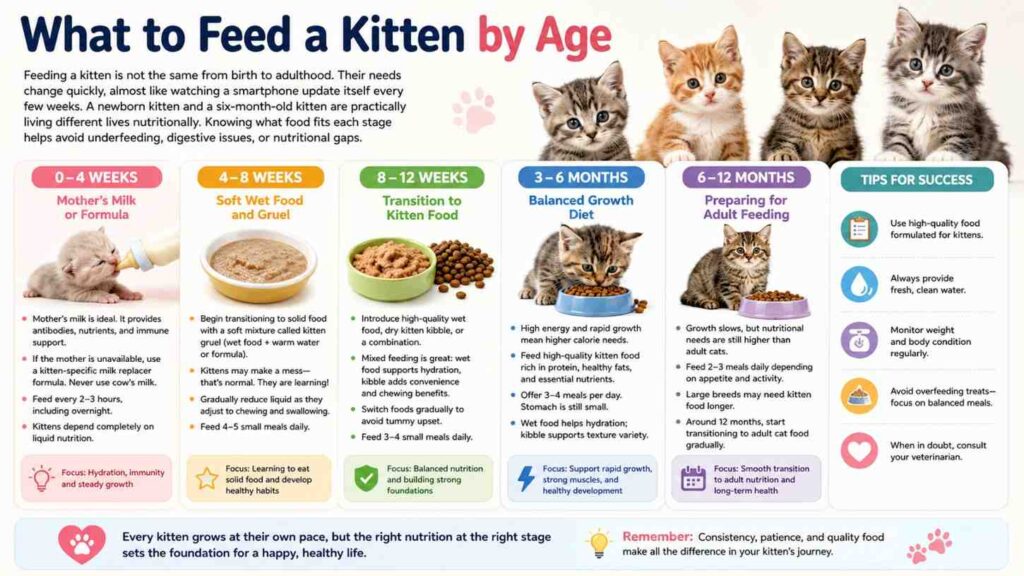
Feeding a kitten is not the same from birth to adulthood. Their needs change quickly, almost like watching a smartphone update itself every few weeks. A newborn kitten and a six-month-old kitten are practically living different lives nutritionally. Knowing what food fits each stage helps avoid underfeeding, digestive issues, or nutritional gaps.
0–4 Weeks: Mother’s Milk or Formula
During the first month of life, kittens should ideally drink their mother’s milk, which naturally contains antibodies, nutrients, and immune support. Mother’s milk acts like nature’s perfect recipe, carefully designed to meet newborn needs. If the mother cat is unavailable, veterinarians recommend a kitten-specific milk replacer formula rather than cow’s milk.
At this age, kittens feed every few hours, even overnight. Their stomachs are tiny, and they depend completely on liquid nutrition. Bottle-feeding orphaned kittens requires patience, warmth, and consistency. Feeding too much too quickly can upset digestion, while underfeeding can slow healthy growth.
4–8 Weeks: Soft Wet Food and Gruel
Around four weeks, kittens begin transitioning toward solid food. This stage feels messy—but exciting. You can start introducing a soft mixture often called kitten gruel, which combines wet kitten food with warm water or formula to create an easy-to-eat texture.
At first, kittens may step in the food more than they eat it. That chaos is normal. They are learning. Gradually reduce liquid content as they adjust to chewing and swallowing soft food. Feeding several small meals daily works best during this stage because energy needs remain high.
8–12 Weeks: Transition to Kitten Food
By eight weeks, most kittens are ready for more structured meals. This is usually the age when kittens go to new homes, making proper nutrition even more important. High-quality wet food, dry kitten kibble, or a combination of both can work well.
Many owners choose mixed feeding because wet food supports hydration while kibble helps with convenience and chewing habits. The important thing is consistency and portion control. Sudden food switches may upset digestion, so gradual transitions work best.
3–6 Months: Balanced Growth Diet
Once kittens reach the three-to-six-month stage, things get exciting—and exhausting. This is when your kitten suddenly transforms into a tiny tornado of energy. One minute they are calmly sleeping on the couch, and the next they are sprinting through the house like they are training for the Olympics. That endless energy comes with bigger nutritional demands. At this age, kittens need a balanced growth diet rich in protein, healthy fats, and essential nutrients to support strong muscles, healthy bones, and rapid development.
Most kittens during this stage do well with three to four meals per day. Their stomachs are still relatively small, so spreading meals across the day helps maintain energy without overwhelming digestion. You may notice appetite increasing significantly—and honestly, it can feel like your kitten is always hungry. That is completely normal because they are burning calories fast. Feeding high-quality kitten food labeled specifically for growth ensures your furry companion receives the extra calories and nutrients they need.
Wet food often remains beneficial because it supports hydration, especially for kittens who are not enthusiastic water drinkers. Dry kitten food also works well and can help introduce texture variety. Many pet owners choose a mixed feeding routine to enjoy the benefits of both. Think of it like creating a balanced menu rather than relying on one single option all the time.
6–12 Months: Preparing for Adult Feeding
By six months, your kitten may start looking surprisingly grown-up, but nutritionally, they are still very much kittens. Their growth rate begins slowing compared to the first few months, but they continue building strength, muscle, and coordination. This stage acts like the final stretch before adulthood. Feeding quality kitten food remains important because nutritional needs are still higher than those of fully mature cats.
Meal frequency can often shift to two or three meals daily depending on your kitten’s appetite and activity level. Some larger breeds, such as Maine Coons, continue growing for much longer and may benefit from kitten food for an extended period. Around the twelve-month mark, many veterinarians recommend transitioning gradually toward adult cat food.
The keyword here is gradually. Imagine eating one type of meal every day, then suddenly switching overnight—it would probably upset your stomach, right? Cats can feel the same way. Slowly mixing increasing amounts of adult food into kitten food over one to two weeks usually makes the transition smoother.
Wet Food vs Dry Food for Kittens
The wet food versus dry food debate has probably confused every kitten owner at least once. Walk into any pet store and suddenly you feel like you need a nutrition degree just to buy dinner. The truth? Both options have strengths, and the best choice often depends on your kitten’s preferences, hydration habits, and your lifestyle.
Benefits of Wet Food
Wet kitten food offers one major advantage: hydration. Since cats naturally have a lower thirst drive, moisture-rich food can help support healthy hydration levels. This matters because proper hydration supports digestion, urinary health, and overall wellbeing. Wet food also tends to smell stronger, which can encourage picky eaters to eat more consistently.
Texture is another plus. Young kittens transitioning from milk to solids often find wet food easier to chew and digest. If you have ever watched a tiny kitten attempt crunchy food for the first time, you know it can feel a bit like watching someone eat rocks. Soft textures simply make the adjustment easier.
There is also something comforting about wet food’s natural meat-like consistency. Many kittens enjoy it because it feels closer to what their instincts expect. For owners trying to increase water intake or encourage eating in fussy kittens, wet food can be a game changer.
Benefits of Dry Food
Dry food earns points for convenience, affordability, and storage. Unlike wet food, kibble can stay out longer without spoiling quickly, making it practical for busy households. Some kittens also enjoy the crunch, which may support dental health by helping reduce plaque buildup—although brushing still matters.
Dry kitten food is calorie-dense too, meaning kittens can get lots of energy in smaller portions. This can help highly active kittens maintain healthy growth without needing endless meal sizes. Many owners also appreciate the convenience of measured portions and automatic feeders.
That said, dry food alone may not provide enough hydration for some kittens. This is why many veterinarians and cat owners prefer a mixed feeding approach, combining wet and dry food to balance hydration, convenience, and nutrition.
Kitten Feeding Chart by Age
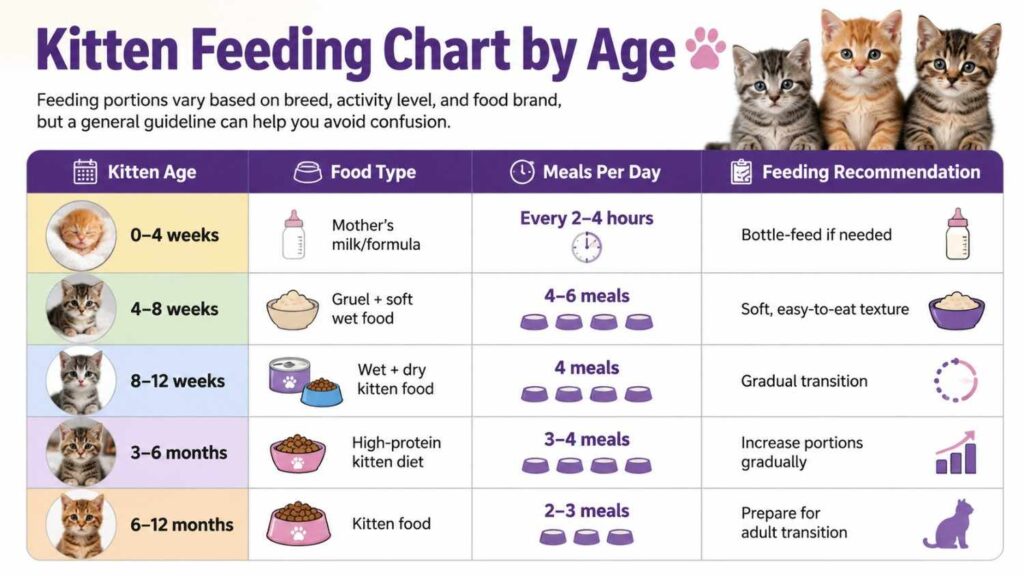
Feeding portions vary based on breed, activity level, and food brand, but a general guideline can help you avoid confusion.
| Kitten Age | Food Type | Meals Per Day | Feeding Recommendation |
|---|---|---|---|
| 0–4 weeks | Mother’s milk/formula | Every 2–4 hours | Bottle-feed if needed |
| 4–8 weeks | Gruel + soft wet food | 4–6 meals | Soft, easy-to-eat texture |
| 8–12 weeks | Wet + dry kitten food | 4 meals | Gradual transition |
| 3–6 months | High-protein kitten diet | 3–4 meals | Increase portions gradually |
| 6–12 months | Kitten food | 2–3 meals | Prepare for adult transition |
Daily Feeding Frequency
Meal frequency matters almost as much as food quality. Young kittens burn through energy incredibly fast, meaning skipping meals can leave them tired or undernourished. Smaller, frequent meals often work better than one or two large portions.
Picture a toddler who runs nonstop all day—they need regular snacks and meals to stay energized. Kittens are not much different. Their tiny bodies work hard growing every single day, so regular feeding helps fuel healthy development.
Foods You Should Never Feed a Kitten
Just because kittens seem curious enough to eat anything does not mean they should. Some common household foods can actually become dangerous. A tiny nibble may seem harmless, but certain foods carry serious health risks.
Avoid feeding:
- Chocolate – toxic to cats and dangerous even in small amounts
- Onions and garlic – may damage red blood cells
- Cow’s milk – often causes digestive upset
- Raw dough – expands dangerously in the stomach
- Bones – can splinter and cause choking or injury
- Dog food – lacks essential feline nutrients like taurine
- Caffeine and alcohol – highly toxic
Human snacks might feel like an act of love, but balanced kitten food is always safer. Think of it this way: kittens are adorable little explorers, but they do not know what is dangerous. That responsibility falls on us.
Signs Your Kitten Is Eating Properly
Wondering if your kitten’s diet is actually working? Good nutrition usually leaves clues. A healthy kitten often looks energetic, playful, and curious. Their coat should appear soft and shiny rather than dull or patchy. Healthy weight gain is another positive sign, especially during rapid growth phases.
You should also watch litter box habits. Consistent digestion usually signals food compatibility, while ongoing diarrhea or constipation may indicate diet issues. Appetite matters too. Kittens generally enjoy food and show enthusiasm during meals. A sudden loss of appetite can sometimes suggest illness and deserves veterinary attention.
Healthy signs include:
- Steady growth and healthy weight gain
- Bright eyes and smooth fur
- High energy and playful behavior
- Regular eating habits
- Healthy digestion and litter box patterns
Conclusion
Learning what to feed a kitten by age can feel overwhelming at first, especially when every brand claims to be the perfect choice. The good news is that kitten nutrition becomes much simpler when you focus on age-appropriate feeding. During the first month, kittens depend on mother’s milk or formula. By four weeks, soft food introductions begin, and by eight weeks, most kittens thrive on balanced kitten food designed for growth.
A combination of high-quality protein, healthy fats, vitamins, minerals, and proper feeding schedules gives kittens the best chance to grow into strong, healthy adult cats. Think of kitten nutrition as planting seeds in a garden—good care early creates healthier growth later. Watching your tiny fluffball thrive because of the choices you make is one of the most rewarding parts of pet ownership.
FAQs
1. Can kittens eat adult cat food?
Kittens can occasionally eat adult cat food, but it should not become their main diet because it lacks nutrients needed for growth.
2. How often should I feed my kitten?
Young kittens usually need 4–6 meals daily, while older kittens around six months may eat 2–3 meals per day.
3. Is wet food or dry food better for kittens?
Both can work well. Wet food helps hydration, while dry food offers convenience. A combination often provides the best balance.
4. Can kittens drink cow’s milk?
No, cow’s milk often causes digestive problems because many kittens struggle to digest lactose.
5. When should I switch my kitten to adult cat food?
Most kittens transition around 12 months of age, though larger breeds may take longer.

