



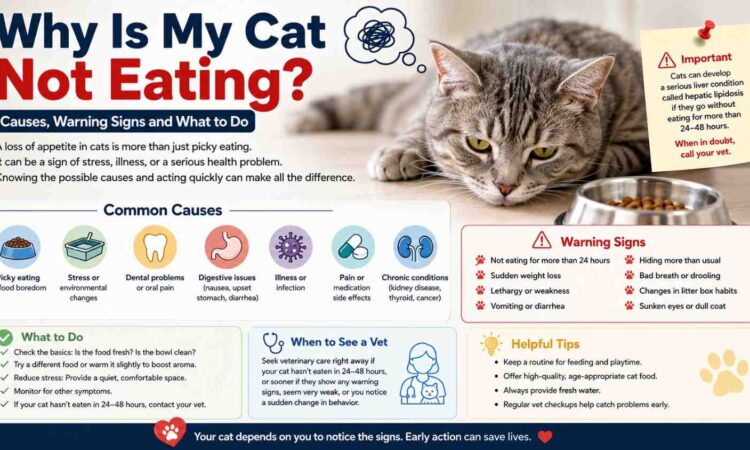
Have you ever filled your cat’s food bowl only to watch them sniff it, turn away, and act like it doesn’t exist? If your furry friend suddenly refuses food, it can feel confusing and worrying at the same time. Cats are creatures of habit, and when something changes in their eating behavior, it often signals that something is not right. While some cats occasionally skip a meal because they feel picky or stressed, refusing food for too long can become dangerous.
Veterinary experts warn that cats who stop eating for more than 24–48 hours may face serious health risks, including a potentially life-threatening liver condition called hepatic lipidosis, often referred to as fatty liver disease. This risk is even higher in overweight cats. Recent veterinary guidance in 2025 and 2026 continues to emphasize that a cat not eating should never be brushed off as “just stubborn behavior.” (Chewy)
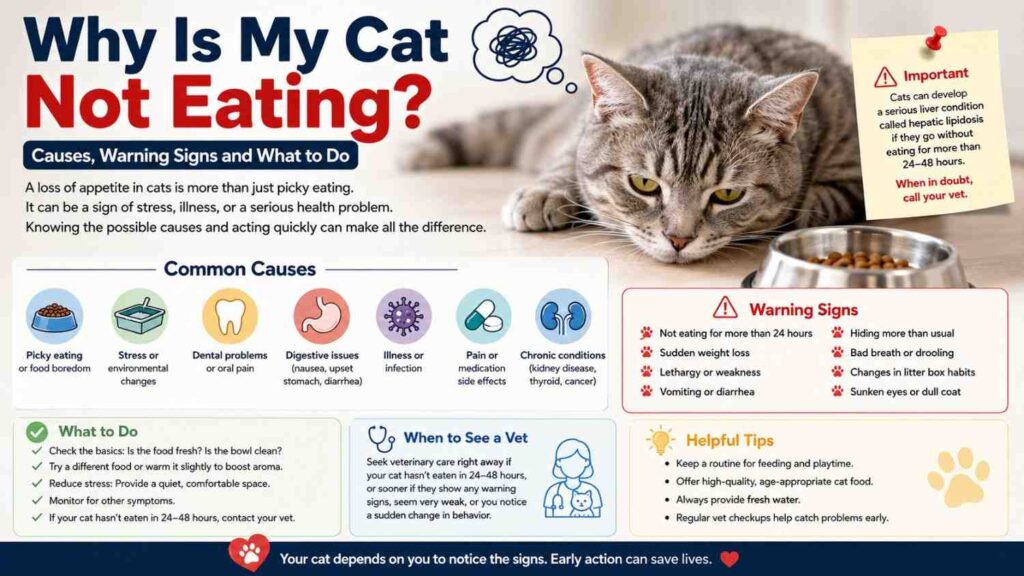
So, why is your cat not eating? The answer is not always simple. Sometimes the cause is harmless, such as stress from a new environment or a dislike for a food flavor. Other times, it could point to dental pain, infections, digestive problems, or more serious illnesses. This guide explores the most common causes, warning signs to watch for, and practical steps you can take to help your cat eat again.
Why Appetite Changes in Cats Should Never Be Ignored
Cats are masters at hiding discomfort. Unlike dogs, which may openly show pain or illness, cats often suffer quietly. That is exactly why changes in appetite can be one of the earliest clues that something is wrong. Think of your cat’s appetite like the warning light on a car dashboard. You might still drive for a short time, but ignoring that signal could lead to bigger problems.
Veterinary sources explain that even missing meals for a short period can affect a cat’s body differently than humans or dogs. When cats stop eating, their bodies quickly start breaking down fat for energy. This fat then accumulates in the liver, potentially leading to hepatic lipidosis, a serious condition that can rapidly worsen if untreated. Experts suggest contacting a veterinarian if your cat has not eaten for more than 24 hours, especially if they also appear tired or sick. (CatMD)
A healthy appetite is often a reflection of overall well-being. If your cat suddenly refuses favorite foods or loses interest in treats, it is worth paying attention. Cats rarely stop eating without a reason, and finding the cause early often makes treatment easier and more successful.
Common Reasons Why Your Cat Is Not Eating
Illness and Underlying Medical Conditions
One of the most common reasons cats stop eating is illness. Just like people lose their appetite when they feel unwell, cats may avoid food if they are in pain or discomfort. Respiratory infections are especially common because cats rely heavily on their sense of smell to enjoy food. If their nose is blocked from congestion, food may suddenly seem uninteresting.
Digestive issues are another major reason. Problems like constipation, nausea, inflammatory bowel disease, stomach irritation, or intestinal blockages can leave cats unwilling to eat. Sometimes cats may approach their bowl, sniff the food, and walk away because they feel nauseous rather than hungry. Veterinary experts frequently note that vomiting, diarrhea, or lip licking alongside appetite loss can indicate gastrointestinal problems. (PetMD)
| Medical Cause | Possible Symptoms | Severity |
|---|---|---|
| Respiratory infection | Sneezing, runny nose, watery eyes | Moderate |
| Digestive issues | Vomiting, diarrhea, constipation | Moderate to serious |
| Kidney disease | Increased thirst, lethargy | Serious |
| Diabetes | Weight loss, frequent urination | Serious |
| Liver disease | Yellow eyes, fatigue | Emergency |
Respiratory Infections and Congestion
Imagine trying to enjoy your favorite meal while your nose is completely blocked. Sounds difficult, right? Cats experience something similar. Upper respiratory infections often reduce a cat’s ability to smell food, making eating less appealing. Signs such as sneezing, watery eyes, nasal discharge, or breathing changes often appear alongside appetite loss. Warming wet food slightly may increase aroma and sometimes encourage eating. (PetMD)
Digestive Problems and Stomach Issues
Digestive discomfort can quickly turn mealtime into something unpleasant for cats. Conditions like constipation, intestinal blockages, pancreatitis, and stomach inflammation can lead to appetite loss. Cats who swallow objects such as string or ribbon may stop eating suddenly and begin vomiting. Since digestive blockages can become emergencies, quick veterinary care is important if symptoms appear severe. (Chewy)
Dental Pain and Mouth Problems
Would you enjoy eating with a painful toothache? Probably not. Dental disease is one of the most overlooked causes of appetite loss in cats. Gum disease, tooth infections, broken teeth, or mouth ulcers can make chewing extremely painful. Some cats may still appear interested in food but walk away after trying to eat.
Watch for warning signs like drooling, bad breath, pawing at the mouth, or dropping food while chewing. Even subtle symptoms matter because cats tend to hide pain surprisingly well. Routine dental care and veterinary checkups can help prevent serious mouth problems before they interfere with eating. (PetMD)
Stress, Anxiety, and Environmental Changes
Believe it or not, cats can become stressed over changes that seem tiny to us. Did you recently move furniture? Bring home a new pet? Change their litter box location? Even something as simple as loud construction noise nearby can throw off your cat’s routine.
Stress-related appetite loss is surprisingly common. Cats love predictability, and disruptions may make them feel unsafe. According to veterinary experts, changes such as moving homes, introducing another pet, or family disruptions may trigger temporary appetite changes. Some cats recover quickly, while others need time and reassurance. (PetMD)
Picky Eating or Food Preferences
Yes, sometimes cats are simply picky eaters. A sudden food brand change, different texture, or unfamiliar flavor can make some cats reject meals entirely. Cats may accept one flavor of the same brand but completely refuse another.
Still, there is an important difference between picky behavior and a medical issue. If your cat refuses food but otherwise behaves normally and accepts treats or favorite snacks, the issue may be preference-related. However, if your cat rejects everything—including treats—it is time to investigate further. Veterinary professionals caution against assuming cats will eventually eat because prolonged fasting may become dangerous. (Chewy)
Warning Signs That Mean You Should Worry
Dangerous Symptoms That Need Immediate Attention
Sometimes appetite loss comes with extra red flags that should never be ignored. If your cat refuses food while also vomiting repeatedly, hiding, struggling to breathe, or becoming unusually sleepy, immediate veterinary care may be necessary.
Look for symptoms such as:
- Vomiting or diarrhea
- Extreme lethargy
- Yellowing of eyes or skin
- Rapid weight loss
- Difficulty breathing
- Drooling or mouth pain
- No drinking or urination
Veterinary guidance says that appetite loss combined with dehydration or breathing trouble deserves urgent evaluation. Cats can decline quickly, especially kittens, elderly cats, and overweight cats. (PetMD)
How Long Can a Cat Go Without Eating?
This question worries nearly every cat owner. Technically, cats can survive for several days without food, but survival is not the same as safety. Veterinary experts warn that problems may begin developing after just 24 hours, with serious fatty liver disease risks increasing significantly after 48–72 hours. (CatMD)
Think of it this way: a cat refusing food is not a waiting game. The earlier you act, the better the outcome tends to be.
What To Do If Your Cat Stops Eating
Safe Things You Can Try at Home
Before panicking, there are a few gentle things you can try safely. Offer warm wet food since stronger smells may tempt your cat. Try favorite treats, plain boiled chicken, or switching textures between wet and dry food. Keep feeding areas quiet and free from stress.
Avoid forcing food into your cat’s mouth unless instructed by a veterinarian. Forced feeding may create fear around eating and sometimes worsen nausea. Fresh water should always remain available, especially if dehydration seems possible. Veterinary experts often recommend observing eating behavior closely for changes in interest or discomfort. (PetsRadar)
Foods That May Encourage Eating
Cats often prefer foods with stronger smells when appetite drops. Here are a few commonly suggested options:
| Food Option | Why It May Help |
|---|---|
| Warm wet cat food | Stronger smell |
| Tuna water (not salted) | Encourages interest |
| Plain boiled chicken | Gentle on stomach |
| Veterinary recovery food | High calories |
Always check with your vet if symptoms continue or worsen.
When to Call a Veterinarian
You should contact a veterinarian if your cat:
- Has not eaten for 24 hours or longer
- Is vomiting repeatedly
- Appears weak or hides unusually
- Has breathing issues
- Shows signs of dehydration
- Suddenly loses weight
Experts consistently warn against waiting too long because cats can deteriorate faster than many owners expect. A veterinarian may recommend blood tests, X-rays, or other exams to identify the root cause. (Chewy)
How Veterinarians Diagnose Appetite Loss
Veterinarians approach appetite loss like detectives solving a mystery. Since many different conditions can cause a cat to stop eating, diagnosis often begins with a physical examination. The vet may ask questions about recent behavior changes, vomiting, bathroom habits, diet changes, or stressful events.
Blood tests often help identify conditions like diabetes, kidney disease, infection, or liver problems. Imaging such as X-rays or ultrasounds may reveal blockages or digestive concerns. In some cases, dental examinations uncover hidden pain that owners never noticed. Veterinary professionals emphasize that identifying the real cause is essential because treatment varies depending on what is wrong. (PetMD)
Preventing Appetite Problems in Cats
Prevention often starts with observation. Knowing your cat’s normal eating habits helps you spot changes quickly. Keep meals consistent, avoid sudden food changes, and create a calm feeding environment. Routine veterinary visits also matter because hidden problems like dental disease or chronic illness often develop slowly.
Cats thrive on routine. Stable meal schedules, clean bowls, fresh water, and stress reduction all help support healthy eating habits. Small details can make a big difference. Sometimes the secret to preventing problems is simply paying close attention to small behavioral shifts before they become major health concerns.
Conclusion
When your cat stops eating, it is natural to worry—and for good reason. Appetite loss in cats is rarely something to ignore, especially when it lasts more than a day. While the cause might be as harmless as food preference or temporary stress, it can also point to infections, dental pain, digestive issues, or serious medical conditions.
The key is paying attention to timing and symptoms. A single skipped meal may not always signal trouble, but refusing food for more than 24 hours deserves action. Watching for warning signs like vomiting, lethargy, breathing issues, or weight loss can help you decide when veterinary care becomes urgent. Your cat cannot explain what feels wrong, but changes in appetite are often their way of asking for help.
FAQs
1. Why is my cat suddenly not eating but acting normal?
Your cat may dislike a new food, feel stressed, or have mild stomach discomfort. If the refusal lasts more than 24 hours, veterinary advice is recommended.
2. How long is too long for a cat not to eat?
Most veterinarians recommend evaluation if a cat has not eaten for 24 hours, especially kittens or older cats.
3. Can stress make cats stop eating?
Yes. Changes in routine, moving homes, loud noises, or new pets can temporarily reduce appetite.
4. What food should I give a cat that won’t eat?
Warm wet food, plain boiled chicken, or vet-approved recovery foods sometimes help encourage appetite.
5. Is it dangerous if my overweight cat stops eating?
Yes. Overweight cats face a higher risk of fatty liver disease (hepatic lipidosis) if they stop eating for too long. Veterinary care is important.

