



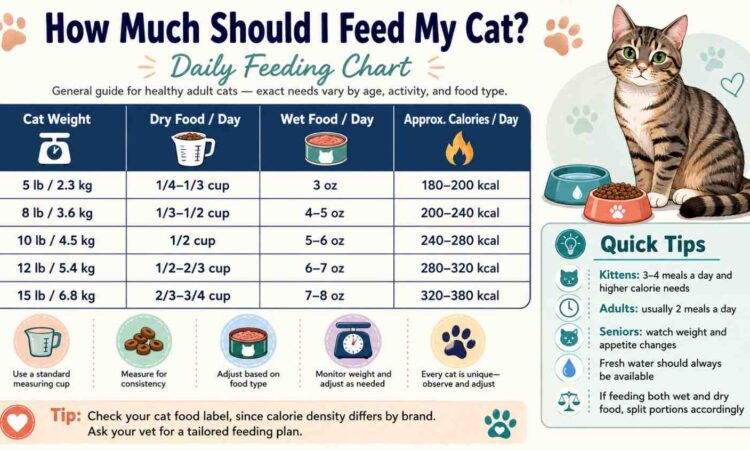
If you have ever stared at a bag of cat food wondering, “Is this really enough for my cat?”—you are definitely not alone. Feeding a cat sounds simple until you realize every cat is different. A playful kitten bouncing off the walls obviously needs a different amount of food than a sleepy senior cat who spends half the day sunbathing near the window. The truth is, there is no magical one-size-fits-all answer. Your cat’s age, weight, activity level, health, and even whether they are spayed or neutered can completely change how much food they need each day. Veterinary guidance in 2026 suggests that healthy adult cats generally require around 20–25 calories per pound of body weight per day, although activity and health conditions can shift that number. (Healthline)
Think of feeding your cat like fueling a tiny athlete. Give too little fuel, and they lose energy, muscle, and health. Give too much, and weight gain sneaks in quietly until suddenly your once-slim feline starts waddling instead of leaping. This guide breaks everything down in plain English, including a daily feeding chart, portion tips, feeding schedules, and the biggest mistakes cat owners make. By the end, you will feel much more confident about what belongs in your cat’s bowl.

Why Proper Cat Feeding Matters
Feeding your cat the right amount is about much more than avoiding an empty bowl. Food directly affects your cat’s energy levels, coat quality, digestive health, weight, and long-term lifespan. Cats are obligate carnivores, which means they depend heavily on animal-based protein to thrive. Unlike humans who can snack on almost anything, cats have very specific nutritional requirements, including nutrients like taurine and arginine. Veterinary experts emphasize that feeding balanced food in proper portions helps support urinary health, immune function, and healthy body weight. (Healthline)
Many cat parents accidentally overfeed because cats are professionals at acting hungry. Have you ever noticed how your cat behaves like they have never eaten before—even ten minutes after dinner? That dramatic stare is often more about habit than hunger. Cats are intelligent creatures and quickly learn that meowing near the kitchen can lead to treats. Portion control matters because obesity is increasingly common among indoor cats and can contribute to problems like arthritis, diabetes, and reduced mobility. (Petco)
The Risks of Overfeeding
Overfeeding is one of the most common mistakes cat owners make. A few extra treats here and there may not seem like a big deal, but calories add up surprisingly fast. Dry food, especially, is calorie-dense. A small scoop might contain far more calories than you think. Studies and veterinary guidance suggest many indoor cats only require around 180–300 calories daily, depending on size and activity level. (Healthline)
Imagine constantly filling up your car with fuel but never driving it. Eventually, there is nowhere for that energy to go. The same thing happens with cats. Excess calories turn into body fat, reducing agility and increasing health risks. Overweight cats often become less playful, groom themselves less effectively, and may struggle with joint pain.
The Dangers of Underfeeding
On the flip side, underfeeding can be just as harmful. Cats that do not get enough food may lose muscle mass, become lethargic, and develop nutrient deficiencies. Kittens are especially vulnerable because they are growing rapidly and need significantly more calories than adults. In fact, kittens often require nearly twice the calorie intake of mature cats for healthy growth. (PetMD)
If your cat constantly begs for food, loses weight, or seems less energetic than usual, it might be a sign they need more calories. Sometimes pet parents mistakenly follow package recommendations too strictly without considering their cat’s individual metabolism or activity level. Think of feeding guidelines like a roadmap—they are helpful, but not always perfectly accurate for every destination.
What Determines How Much Food Your Cat Needs?
Before grabbing a measuring cup, you should understand what actually affects your cat’s food requirements. There is no universal portion size because every cat is unique. Feeding a cat properly is a bit like tailoring clothes—you want the fit to match the individual, not the average.
Cat Age and Life Stage
Age plays a huge role in determining how much food your cat should eat. Kittens are tiny eating machines. They grow rapidly and burn energy at an impressive rate, which means they need more frequent meals and calorie-dense kitten food. Adult cats generally require stable maintenance calories, while senior cats may need dietary adjustments depending on activity and health.
Feeding Kittens vs Adult Cats
Here is the biggest difference: kittens need food often, while adults benefit from structured meals. Young kittens usually need 4–6 meals daily, especially during the early months. Adults generally thrive with 2–3 meals daily, split into smaller portions for easier digestion and better energy regulation. Veterinary recommendations increasingly suggest smaller, more frequent meals instead of unlimited grazing. (Healthline)
Weight and Body Condition
Your cat’s body condition matters more than breed alone. A muscular, active cat weighing 10 pounds may need more calories than a lazy cat of the same size. Experts recommend monitoring your cat’s waistline and rib visibility rather than obsessing over exact numbers. You should feel the ribs slightly without pressing too hard, but they should not visibly stick out.
Indoor vs Outdoor Lifestyle
Indoor cats usually need fewer calories because they burn less energy. Outdoor cats or highly active indoor cats who climb, chase toys, and stay constantly engaged may require noticeably more food. Think about it: a couch-loving cat and a backyard explorer are living completely different lifestyles.
Spayed or Neutered Cats
Did you know spaying or neutering can reduce metabolism by about 30%? That means many cats require fewer calories after surgery. This is one reason sudden weight gain sometimes happens after neutering if feeding habits stay exactly the same. (PetMD)
Daily Cat Feeding Chart by Weight
Below is a general daily feeding chart for healthy adult cats. These are starting points—not strict rules. Always check calorie labels because brands vary widely.
Dry Food Feeding Chart
| Cat Weight | Daily Calories | Dry Food Amount |
|---|---|---|
| 5 lbs (2.3 kg) | 120–180 kcal | ¼–⅓ cup |
| 8 lbs (3.6 kg) | 160–220 kcal | ⅓–½ cup |
| 10 lbs (4.5 kg) | 200–250 kcal | ½ cup |
| 12 lbs (5.4 kg) | 240–300 kcal | ½–¾ cup |
| 15 lbs (6.8 kg) | 280–350 kcal | ¾ cup |
Healthy 11-pound cats commonly need around 250–290 calories daily, depending on activity and body condition. (Healthline)
Wet Food Feeding Chart
Assuming standard 3-ounce wet food cans:
| Cat Weight | Daily Wet Food |
|---|---|
| 5 lbs | 1.5–2 cans |
| 8 lbs | 2–2.5 cans |
| 10 lbs | 2.5–3 cans |
| 12 lbs | 3–3.5 cans |
| 15 lbs | 3.5–4 cans |
Wet food supports hydration because of its high moisture content, making it especially helpful for cats prone to urinary issues. Many veterinarians recommend at least some wet food in the diet for better hydration. (Healthline)
Mixed Feeding (Wet + Dry) Guide
A combination diet often works best for many households. For example:
- Morning: Half can wet food
- Evening: Half can wet food
- Dry food: Measured kibble portion (¼–⅓ cup)
This setup balances convenience with hydration while helping control calories.
How Often Should You Feed Your Cat?
Cats naturally prefer several smaller meals throughout the day. In the wild, they would catch multiple tiny prey rather than eat one giant feast. Your cat’s digestive system still reflects those instincts.
Best Feeding Schedule for Kittens
Kittens need regular meals because their tiny stomachs empty quickly.
Suggested Kitten Schedule:
- Morning breakfast
- Midday meal
- Afternoon meal
- Evening dinner
- Optional late-night snack
Ideal Meal Times for Adult Cats
For adults, 2–3 meals daily generally works best. Some cat owners use automatic feeders for midday meals if they work long hours. Structured feeding helps prevent overeating and makes monitoring appetite easier. A sudden drop in appetite can sometimes signal illness.
Common Cat Feeding Mistakes to Avoid
Feeding mistakes happen even to loving pet parents. The key is learning what to avoid.
Free Feeding Too Much Dry Food
Leaving a bowl of kibble available all day sounds convenient, but it often leads to overeating—especially for indoor cats. Dry food is calorie-dense, and many cats snack out of boredom rather than hunger. Portion-controlled feeding is usually safer.
Ignoring Calories and Treats
Treats count too. Those tiny snacks may seem harmless, but they can quietly increase calorie intake. Experts recommend treats stay under 10% of total daily calories. (purina.com)
Signs Your Cat Is Eating the Right Amount
How do you know if your feeding plan actually works? Your cat will usually tell you—just not with words. A healthy cat should maintain stable weight, have a shiny coat, consistent energy, and a visible waistline when viewed from above.
Here are positive signs:
- Healthy body weight
- Playful behavior
- Consistent appetite
- Normal litter box habits
- Smooth, glossy coat
If your cat gains weight quickly, seems unusually hungry, or becomes sluggish, it may be time to adjust portions or speak with your veterinarian.
Conclusion
Figuring out how much you should feed your cat is not about blindly following food labels—it is about understanding your individual pet. Age, weight, activity, lifestyle, and health all influence daily feeding needs. Most adult cats need around 180–300 calories daily, split across multiple meals, while kittens need significantly more food to fuel rapid growth. (Healthline)
The smartest approach is to start with a feeding chart, monitor your cat’s body condition, and make small adjustments when necessary. Think of it as a conversation between you and your cat’s body. If their energy is high, weight is stable, and they look healthy, chances are you are doing a great job.
FAQs
1. How much dry food should a 10-pound cat eat daily?
Most healthy 10-pound adult cats eat about ½ cup of dry food daily, depending on calorie density.
2. Is wet food better than dry food for cats?
Neither is automatically better. Wet food improves hydration, while dry food is convenient. Many owners use a mix of both.
3. How many times a day should I feed my cat?
Adult cats generally do best with 2–3 meals daily, while kittens may need 4–6 meals.
4. Should I leave food out all day for my cat?
Free feeding can cause overeating in many indoor cats. Measured portions are usually healthier.
5. Why does my cat always act hungry?
Cats may beg out of habit, boredom, or genuine hunger. Check body condition and feeding amounts before increasing portions.

