



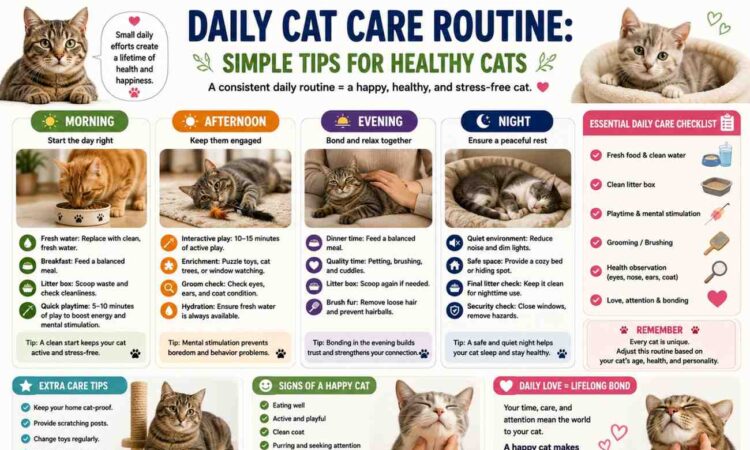
Cats may seem independent, but they still need daily care to stay healthy, happy, and emotionally secure. A good daily cat care routine does not have to be complicated. In fact, the best routine is simple, consistent, and easy to follow every day.
Whether you are a first-time cat owner or already have a feline friend at home, creating a regular routine helps your cat feel safe. Cats love predictability. They like knowing when food arrives, where the litter box is, when playtime happens, and where they can rest without being disturbed.
A healthy cat care routine includes feeding, fresh water, litter box cleaning, play, grooming, observation, and bonding. These small daily habits can prevent bigger problems later, including stress, obesity, boredom, litter box issues, and poor hygiene.
In this guide, you will learn a simple daily cat care routine with practical tips to keep your cat healthy, clean, active, and comfortable.
Why a Daily Cat Care Routine Is Important
A daily routine gives your cat structure. Unlike humans, cats do not enjoy sudden changes. A noisy home, irregular feeding schedule, dirty litter box, or lack of play can make a cat anxious or frustrated.
When your cat has a steady routine, it becomes easier to notice when something is wrong. For example, if your cat suddenly stops eating, hides more than usual, drinks too much water, or avoids the litter box, you can spot the change quickly.
Daily care also supports:
- Better digestion
- Healthy weight
- Cleaner litter habits
- Reduced stress
- Stronger bonding
- Better grooming
- More active behavior
- Early detection of health problems
A healthy cat is not only a cat that eats well. A healthy cat also feels safe, plays regularly, uses the litter box normally, sleeps comfortably, and trusts its owner.
Morning Cat Care Routine
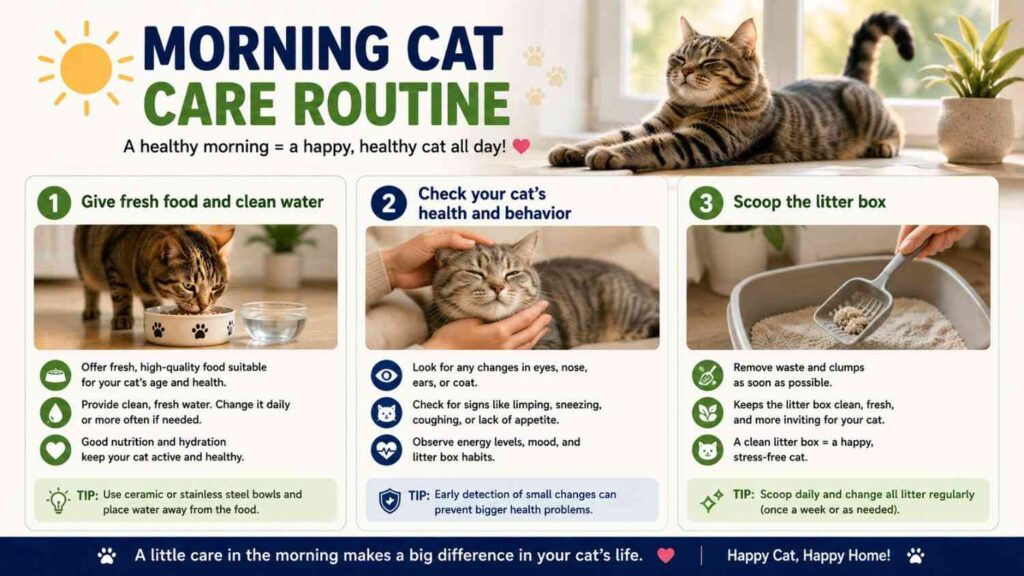
Morning is a great time to check your cat’s basic needs. Most cats are active in the early morning and may expect food, attention, or play.
Give Fresh Food and Clean Water
Start the day by giving your cat fresh food and clean water. Cats need a balanced diet based on their age, weight, and health condition. Kittens, adult cats, senior cats, and cats with medical issues may all need different types of food.
If your cat eats wet food, remove leftovers after a short time so it does not spoil. If your cat eats dry food, make sure the bowl is clean and the food is fresh.
Water is just as important as food. Many cats do not drink enough water, so always keep clean water available. Some cats prefer a water fountain because moving water feels fresher to them.
Simple morning feeding tips:
- Feed at the same time each day
- Use clean bowls
- Avoid overfeeding
- Follow portion guidelines
- Keep fresh water available
- Watch for appetite changes
If your cat suddenly refuses food for a full day, contact a veterinarian. Appetite changes can be an early sign of illness.
Check Your Cat’s Health and Behavior
A quick morning health check takes less than a minute but can be very helpful. You do not need to do a full medical exam every day. Just observe your cat carefully.
Look for:
- Bright, clear eyes
- Normal walking
- Normal appetite
- Clean nose
- Healthy coat
- Normal energy level
- No unusual hiding
- No vomiting or diarrhea
- No signs of pain
Cats are very good at hiding illness. A small change in behavior can sometimes mean something is wrong. If your normally friendly cat suddenly hides all day or your active cat becomes very quiet, pay attention.
Scoop the Litter Box
A clean litter box is one of the most important parts of daily cat care. Cats are naturally clean animals, and many will avoid a dirty litter box.
Scoop the litter box every morning to remove urine clumps and feces. This keeps your home fresher and helps your cat feel comfortable using the box.
While cleaning, notice any changes such as:
- More urine than usual
- Very little urine
- Diarrhea
- Hard stool
- Blood in urine or stool
- Strong unusual smell
- Cat avoiding the box
Litter box changes can sometimes show health problems early, especially urinary issues.
Daytime Cat Care Tips
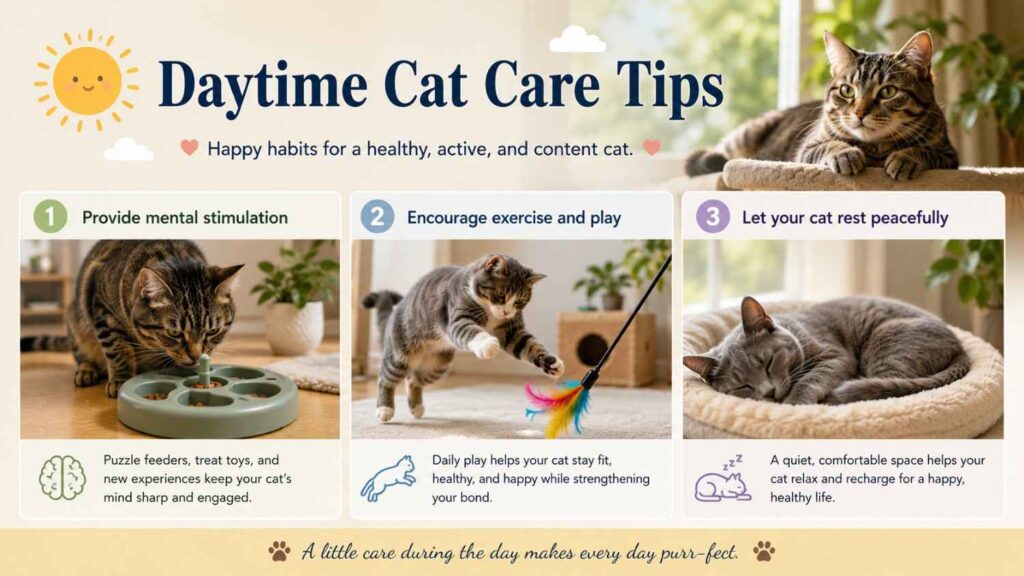
During the day, your cat needs more than food and sleep. Indoor cats especially need mental stimulation and movement to prevent boredom.
Provide Mental Stimulation
Cats are curious animals. They enjoy watching, smelling, exploring, and solving small challenges. Without mental stimulation, indoor cats may become bored, lazy, anxious, or destructive.
Easy enrichment ideas include:
- Puzzle feeders
- Treat balls
- Cardboard boxes
- Cat tunnels
- Window perches
- Safe shelves or cat trees
- Rotating toys
- Hiding treats around the room
You do not need expensive items. Even a clean cardboard box can become an exciting play space for many cats.
Encourage Exercise and Play
Playtime is not just entertainment. It helps cats exercise, release energy, and use their natural hunting instincts.
Good daily play toys include:
- Feather wands
- Toy mice
- Crinkle balls
- Cat tunnels
- Kicker toys
- Laser pointers
- Puzzle toys
Try to play with your cat for 10 to 20 minutes a day. Some cats prefer short sessions, such as 5 minutes in the morning and 10 minutes in the evening.
When using a wand toy, move it like prey. Let it hide, run, stop, and escape. Most importantly, let your cat catch it sometimes. Cats enjoy the full hunting cycle: stalk, chase, pounce, catch, and bite.
Let Your Cat Rest Peacefully
Cats sleep a lot, often many hours a day. Rest is normal and healthy. Your cat should have quiet, comfortable places to sleep without being disturbed.
Good resting spots include:
- Soft beds
- Blankets
- Cat trees
- Window perches
- Quiet corners
- Covered cat beds
- High shelves
Avoid waking your cat constantly, especially if there are children in the home. A peaceful resting area helps your cat feel safe.
Evening Cat Care Routine
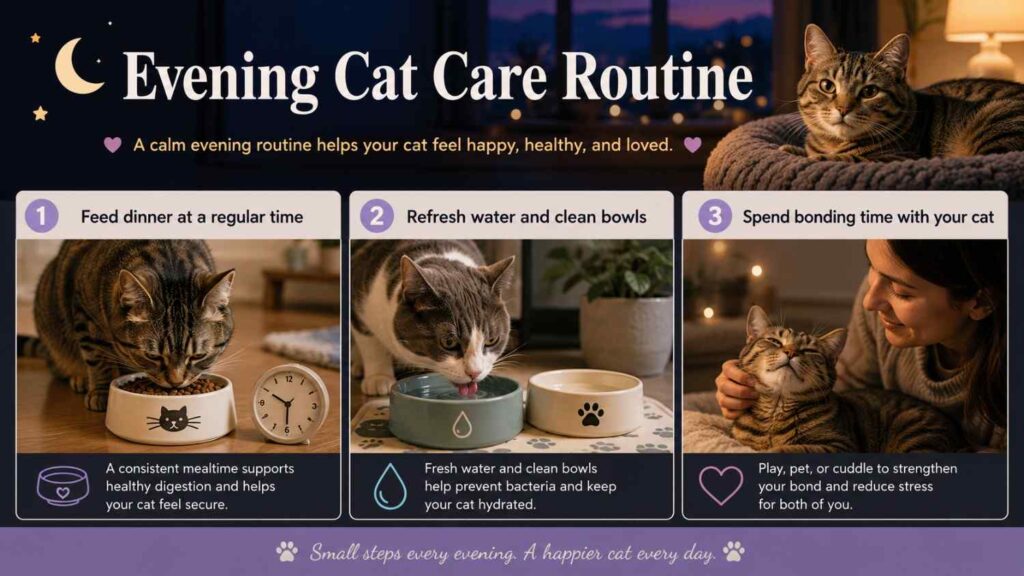
Evening is a perfect time for feeding, bonding, and checking your cat before bedtime.
Feed Dinner at a Regular Time
Cats do well with predictable feeding times. Feeding dinner at the same time every evening helps create a calm routine.
Avoid giving too many treats at night. Treats should not replace balanced food. If your cat begs often, use play, puzzle feeders, or portion-controlled meals instead of extra snacks.
Refresh Water and Clean Bowls
Before bedtime, check your cat’s water bowl again. Wash food bowls regularly because old food residue can attract bacteria and smell bad.
If you use wet food, clean the bowl after each meal. For dry food, wash the bowl at least once daily or every couple of days.
Spend Bonding Time with Your Cat
Cats may not always demand attention like dogs, but they still need emotional connection. Bonding time can be simple.
You can:
- Talk softly
- Sit near your cat
- Offer gentle petting
- Play with a favorite toy
- Brush your cat
- Let your cat sit beside you
The key is to respect your cat’s mood. Some cats love cuddles, while others prefer sitting nearby without being touched too much.
A strong bond grows through patience, trust, and routine.
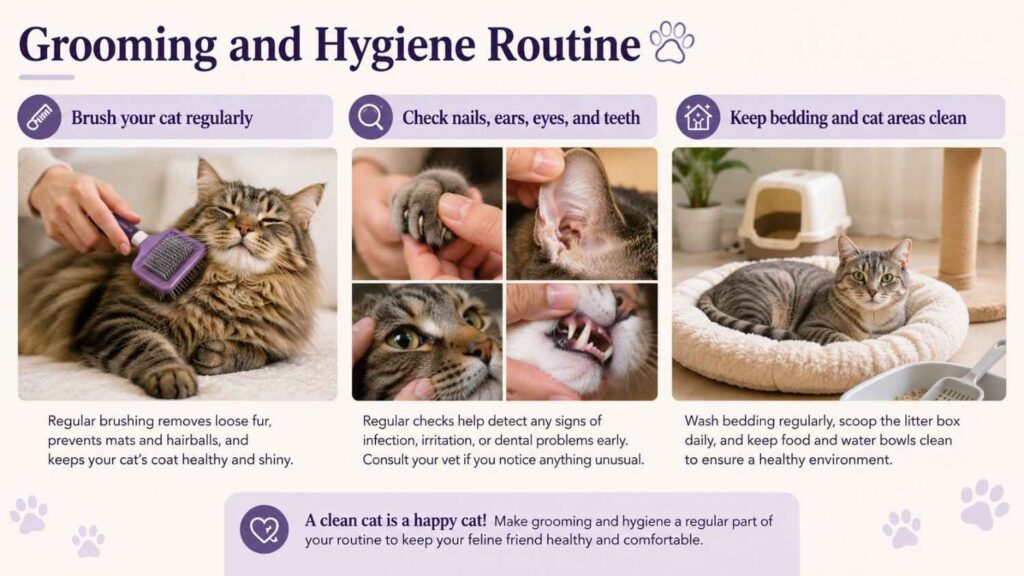
Grooming and Hygiene Routine
Cats groom themselves, but they still need help from their owners. Regular grooming keeps the coat healthy and helps you notice skin problems early.
Brush Your Cat Regularly
Short-haired cats may only need brushing a few times a week, while long-haired cats may need brushing daily. Brushing removes loose hair, reduces shedding, prevents mats, and helps control hairballs.
Benefits of brushing:
- Cleaner coat
- Less loose fur
- Fewer hairballs
- Better skin circulation
- Stronger bonding
- Early detection of fleas, wounds, or lumps
Start slowly if your cat dislikes brushing. Use short sessions and reward calm behavior.
Check Nails, Ears, Eyes, and Teeth
You do not need to trim nails every day, but you should check them regularly. Overgrown nails can become uncomfortable.
Also check:
- Eyes: clear, not watery or swollen
- Ears: clean, no strong smell
- Teeth: no heavy tartar or bad breath
- Paws: no cuts or swelling
- Skin: no bald patches or redness
Dental care is often forgotten, but it is important. If your cat has bad breath, drooling, difficulty eating, or red gums, visit a vet.
Keep Bedding and Cat Areas Clean
Your cat’s bed, blankets, toys, and favorite sleeping spots collect fur and dirt. Clean them regularly to keep your home fresh and comfortable.
Simple cleaning routine:
- Shake out blankets
- Wash bedding weekly
- Clean food and water bowls
- Vacuum cat hair
- Wash washable toys
- Replace damaged toys
A clean environment supports better health for both cats and humans.
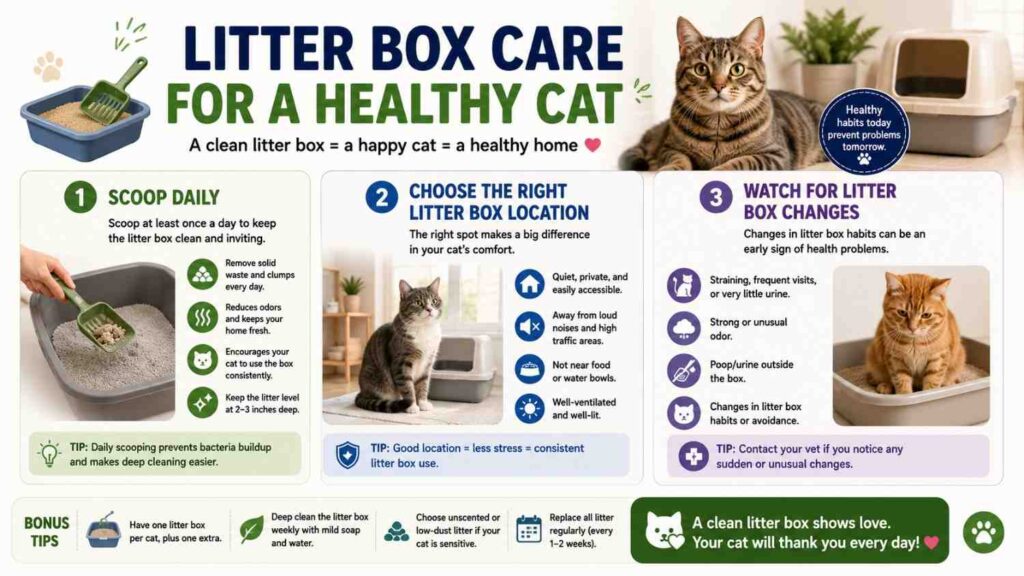
Litter Box Care for a Healthy Cat
The litter box is one of the most important parts of cat ownership. Many behavior problems begin when the litter box is dirty, stressful, too small, or poorly placed.
Scoop Daily
Scoop at least once a day. If you have multiple cats, scoop more often. A dirty litter box can cause stress and may lead your cat to eliminate outside the box.
Also deep clean the litter box regularly. Empty the litter, wash the box with mild soap, dry it fully, and refill with clean litter.
Avoid harsh chemicals with strong smells. Cats have sensitive noses and may avoid the box if it smells unpleasant.
Choose the Right Litter Box Location
Place the litter box in a quiet, easy-to-reach area. Avoid loud places near washing machines, busy doors, or noisy appliances.
A good litter box location should be:
- Quiet
- Easy to access
- Away from food and water
- Not too hidden
- Safe from sudden noise
- Comfortable for your cat
If you have more than one cat, provide enough litter boxes. A common rule is one litter box per cat, plus one extra.
Watch for Litter Box Changes
A cat’s litter box habits can tell you a lot about health. If your cat suddenly urinates outside the box, strains, cries, or visits the box many times without producing much urine, seek veterinary help quickly.
Urinary problems can be serious, especially in male cats.
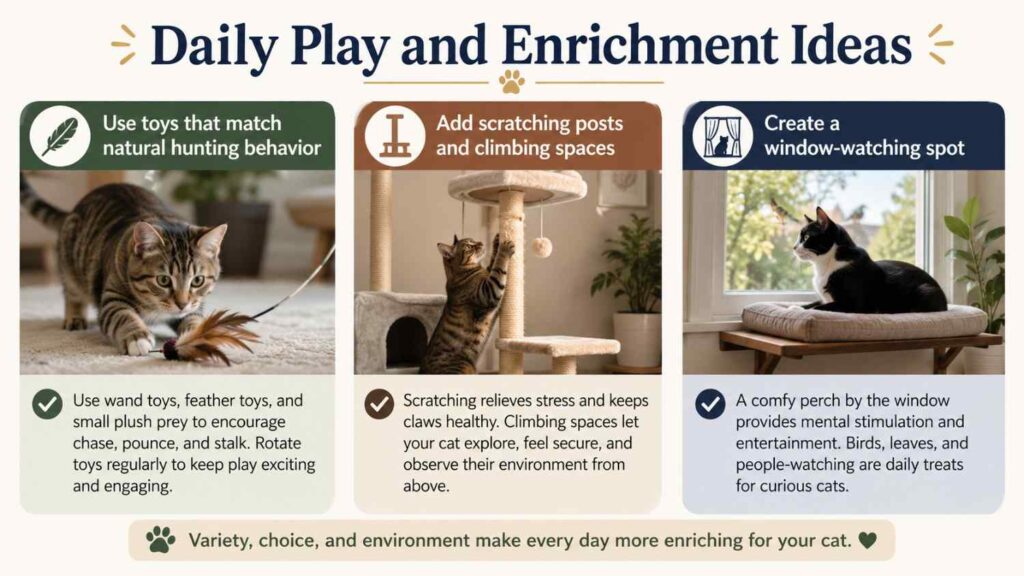
Daily Play and Enrichment Ideas
A healthy cat needs both physical and mental activity. Indoor cats do not hunt outside, so owners must create safe indoor enrichment.
Use Toys That Match Natural Hunting Behavior
Cats enjoy toys that move like prey. Wand toys, small balls, toy mice, and feather teasers are great options.
Try this simple play routine:
- Let your cat stalk the toy
- Move it slowly like prey
- Make it run or hide
- Let your cat chase
- Let your cat catch it
- End with a small meal or treat
This routine feels natural and satisfying for many cats.
Add Scratching Posts and Climbing Spaces
Scratching is normal cat behavior. Cats scratch to stretch, mark territory, and keep their claws healthy.
Provide scratching options such as:
- Vertical scratching posts
- Cardboard scratchers
- Sisal posts
- Scratching mats
- Cat trees
If your cat scratches furniture, place a scratching post near that area and reward your cat for using it.
Cats also enjoy vertical space. Cat trees, shelves, and window perches help them feel safe and confident.
Create a Window-Watching Spot
A window perch can provide hours of entertainment. Cats love watching birds, people, leaves, sunlight, and outdoor movement.
Make sure the window is secure. If you open windows, use strong screens to prevent accidents.
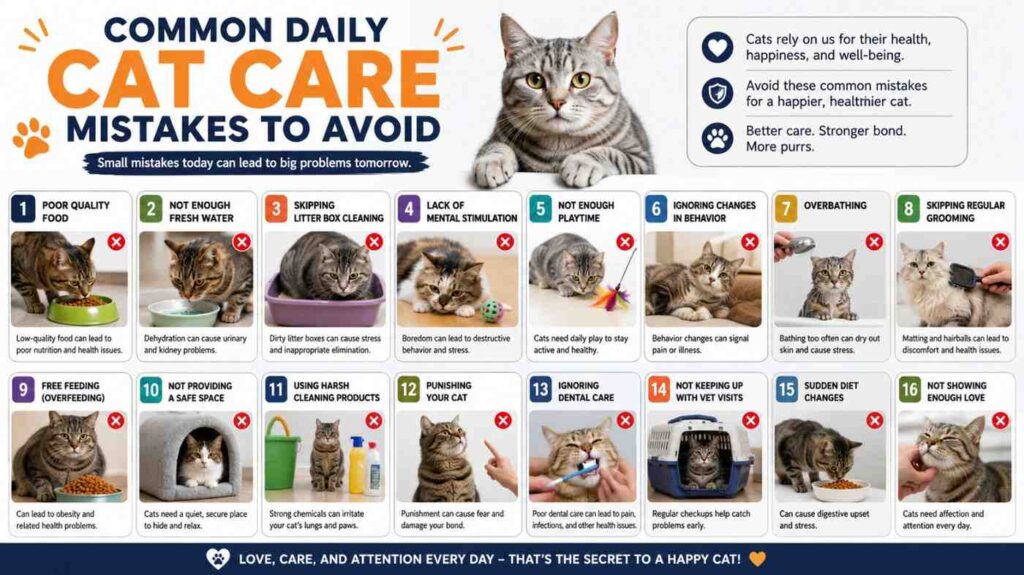
Common Daily Cat Care Mistakes to Avoid
Even loving cat owners can make simple mistakes. Avoiding these habits can help your cat stay healthier and happier.
Mistake 1: Not Cleaning the Litter Box Daily
A dirty litter box is one of the biggest reasons cats develop bathroom problems. Scoop daily and deep clean regularly.
Mistake 2: Overfeeding
Many indoor cats gain weight because they eat too much and move too little. Follow feeding guidelines and ask your vet about your cat’s ideal weight.
Mistake 3: Ignoring Playtime
Cats need activity. Without play, they may become bored, cat with excess weight, or stressed.
Mistake 4: Not Providing Scratching Options
Scratching is not bad behavior. It is a natural need. Give your cat proper scratching posts instead of punishing them.
Mistake 5: Using Strong Fragrances
Strong perfumes, scented litter, or harsh cleaners may bother your cat’s sensitive nose. Choose gentle, cat-safe cleaning products.
Mistake 6: Missing Early Health Signs
Small changes matter. If your cat eats less, hides more, drinks more, loses weight, vomits often, or changes litter habits, do not ignore it.
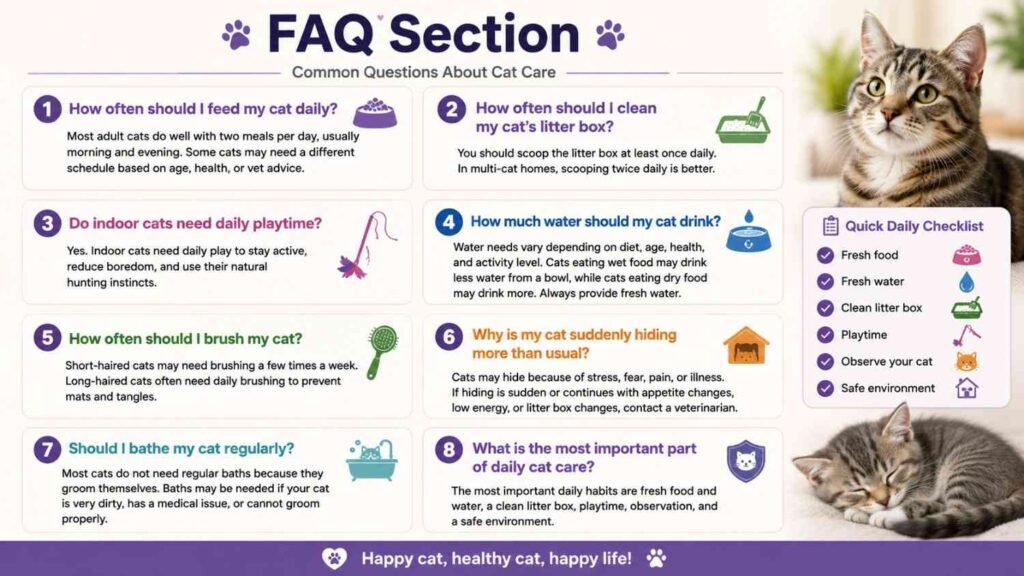
FAQ Section
How often should I feed my cat daily?
Most adult cats do well with two meals per day, usually morning and evening. Some cats may need a different schedule based on age, health, or vet advice.
How often should I clean my cat’s litter box?
You should scoop the litter box at least once daily. In multi-cat homes, scooping twice daily is better.
Do indoor cats need daily playtime?
Yes. Indoor cats need daily play to stay active, reduce boredom, and use their natural hunting instincts.
How much water should my cat drink?
Water needs vary depending on diet, age, health, and activity level. Cats eating wet food may drink less water from a bowl, while cats eating dry food may drink more. Always provide fresh water.
How often should I brush my cat?
Short-haired cats may need brushing a few times a week. Long-haired cats often need daily brushing to prevent mats and tangles.
Why is my cat suddenly hiding more than usual?
Cats may hide because of stress, fear, pain, or illness. If hiding is sudden or continues with appetite changes, low energy, or litter box changes, contact a veterinarian.
Should I bathe my cat regularly?
Most cats do not need regular baths because they groom themselves. Baths may be needed if your cat is very dirty, has a medical issue, or cannot groom properly.
What is the most important part of daily cat care?
The most important daily habits are fresh food and water, a clean litter box, playtime, observation, and a safe environment.
Conclusion
A daily cat care routine is simple, but it makes a big difference in your cat’s health and happiness. Cats need more than food and a place to sleep. They need clean water, a fresh litter box, regular play, grooming, mental stimulation, and emotional security.
The best routine is one you can follow every day. Feed your cat at regular times, scoop the litter box daily, provide toys and scratching posts, check for health changes, and spend calm bonding time together.
When you care for your cat consistently, your cat feels safer, healthier, and more connected to you. A happy cat does not need a perfect home. It needs a clean, loving, predictable home where its daily needs are understood and respected.

