

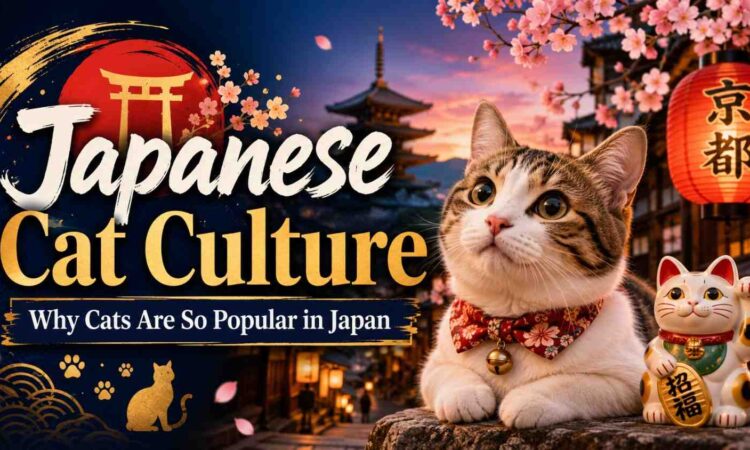
Japanese cat culture is one of the most fascinating examples of how an animal can become part of a country’s identity. In Japan, cats are not just pets. They are symbols of luck, comfort, mystery, cuteness, independence, and even spiritual power. You can find them in temples, anime, manga, cafés, train stations, souvenir shops, folklore, social media, and entire islands known for their feline residents.
The popularity of cats in Japan is not a recent trend. It has deep roots in history, religion, business, storytelling, and everyday life. Cats were once valued for protecting precious goods from rats and mice. Over time, they became associated with good fortune, household comfort, and supernatural mystery. Today, they remain one of the most beloved animals in Japanese society.
From the famous maneki-neko lucky cat to the peaceful cat island of Tashirojima, from cat cafés in crowded cities to Hello Kitty’s global influence, Japan’s relationship with cats is rich and layered. It combines tradition and modern pop culture in a way few other countries do.
So why are cats so popular in Japan? The answer is not just because they are cute. Cats match many parts of Japanese culture: appreciation for small details, love of seasonal and symbolic objects, respect for quiet spaces, fascination with folklore, and the emotional comfort of companionship.
Why Cats Hold a Special Place in Japanese Culture
Cats hold a special place in Japanese culture because they represent several ideas at once. They are cute, but also mysterious. They are domestic, but also independent. They are playful, but also calm. This balance makes them easy to connect with many different aspects of Japanese life.
In Japanese culture, visual symbols matter deeply. Small objects can carry big meaning, whether it is a charm from a shrine, a seasonal decoration, a mascot character, or a carefully designed souvenir. Cats fit perfectly into this world of symbolic design. Their shape, posture, expression, and behavior are easy to turn into meaningful icons.
Cats also have a quiet presence that suits many Japanese spaces. In a small apartment, a cat can be a peaceful companion. In a temple, a cat can seem spiritual and watchful. In a café, a cat can create a calming atmosphere. In anime or manga, a cat can become a magical guide, comic sidekick, or emotional symbol.
This flexibility is one of the main reasons Japanese cat culture is so strong. Cats can belong to both the old and the new. They can appear in ancient folklore and modern branding. They can be sacred, silly, elegant, spooky, lucky, or adorable depending on the context.
A Brief History of Cats in Japan
Cats as protectors of valuable goods
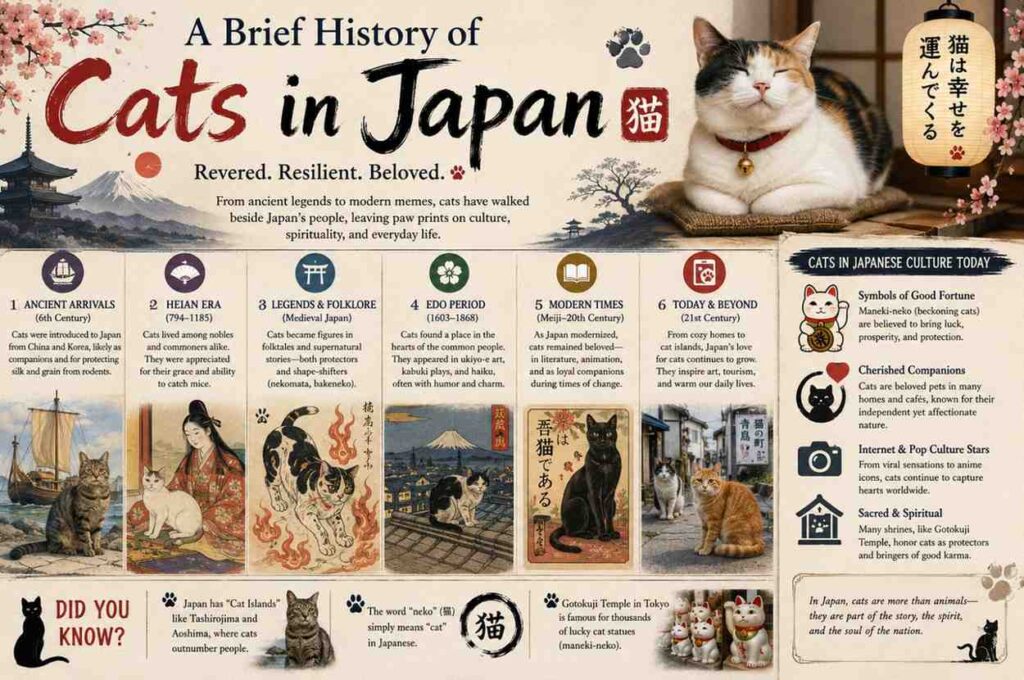
Cats are believed to have entered Japan many centuries ago, likely through contact with China and other parts of Asia. At first, their value was practical. Cats helped protect important materials from rodents, especially in places where food, books, silk, or religious texts needed to be kept safe.
This practical role gave cats status. A cat was not only a pet; it was a protector. In Buddhist temples and elite households, cats helped guard valuable objects from mice and rats. Their ability to protect delicate items made them useful and respected.
This early role also helps explain why cats became connected with luck. A cat that protected food, silk, or books could protect wealth and prosperity. Over time, that practical usefulness became symbolic. The cat became an animal that guarded fortune.
Cats in temples, homes, and daily life
As cats became more familiar in Japan, they began appearing in stories, paintings, poetry, and daily domestic life. They were admired for their elegance, independence, and graceful movement. Unlike working animals that depended heavily on human command, cats seemed to move between human and mysterious worlds.
In homes, cats brought comfort. In temples, they carried a feeling of quiet watchfulness. In towns and shops, they became associated with good luck and prosperity. This mixture of usefulness and symbolism allowed cats to become part of Japanese cultural imagination.
Japanese culture often values subtle beauty, small gestures, and quiet companionship. Cats naturally fit into this aesthetic. A cat sitting near a window, walking through a narrow street, or resting beside a temple gate can feel like part of the scenery. This is why cats often appear so naturally in Japanese photography, literature, and animation.
Maneki-Neko: The Famous Japanese Lucky Cat
What maneki-neko means
One of the most famous symbols of Japanese cat culture is the maneki-neko, often called the “beckoning cat” or “lucky cat.” This is the small cat figurine with one paw raised, commonly seen in shops, restaurants, homes, and businesses.
The word “maneki” comes from the idea of beckoning or inviting, while “neko” means cat. Together, maneki-neko suggests a cat that invites good fortune. Many people believe the raised paw welcomes luck, customers, money, or happiness.
Maneki-neko figures usually appear as white cats with red collars, though they can also come in gold, black, red, pink, and other colors. Different colors are often linked with different wishes, such as wealth, protection, love, or health. Some figures raise the left paw, some raise the right paw, and some raise both.
This lucky cat has become one of Japan’s most recognizable cultural symbols. Even people who know little about Japanese traditions often recognize maneki-neko from restaurants, souvenir shops, and Asian businesses around the world.
Why the beckoning cat became a business symbol
Maneki-neko became especially popular as a business symbol because it represents invitation and prosperity. A shop owner wants customers to enter. A restaurant owner wants good fortune. A family wants protection and happiness. The beckoning cat expresses all of these hopes in a simple, charming form.
One of the most famous places connected with maneki-neko is Gotokuji Temple in Tokyo. The temple is strongly associated with the legend of a cat that brought good fortune. Today, visitors go there to see many white beckoning cat figures and to pray for luck, success, and well-being.
The success of maneki-neko shows how Japanese cat culture blends folklore, religion, business, and visual design. It is cute enough to be a souvenir, meaningful enough to be a charm, and famous enough to become a global icon.
Cat Islands in Japan
Tashirojima and the tradition of cat protection
Japan is famous for its “cat islands,” where cats are a major part of local identity. One of the best-known is Tashirojima, an island in Miyagi Prefecture. Tashirojima is often called Cat Island because of its large population of semi-wild cats and its long tradition of caring for them.
Historically, cats on Tashirojima were valued because they helped protect silkworm production by catching rats. Fishermen also cared for the cats and believed they brought good luck. Over time, cats became deeply connected with the island’s identity.
Tashirojima even has a small cat shrine, showing the respect local people have had for cats. This shrine reflects the belief that cats were not just animals wandering the island, but meaningful beings connected with fortune, protection, and community life.
Why tourists love Japan’s cat islands
Cat islands attract tourists because they offer something unusual: a place where cats appear to be part of the landscape. Visitors can walk through quiet roads, see cats resting near houses, and experience a slower rhythm of life.
For many travelers, cat islands represent a softer side of Japan. They are not like the bright lights of Tokyo or the historic temples of Kyoto. They are peaceful, local, and slightly magical. The cats create a sense of discovery and charm.
However, responsible tourism is important. Cat islands are real communities, not theme parks. Visitors should respect local residents, avoid disturbing cats, follow feeding rules, and support humane care when possible. The popularity of cat islands should help protect cats and communities, not create problems for them.
Cat Cafés and Modern Urban Cat Culture
Why cat cafés became popular in Japan
Cat cafés are another major part of Japanese cat culture. These cafés allow visitors to spend time with cats in a relaxed indoor setting. They became popular in Japan because they answered a very real urban need.
Many people in Japanese cities live in small apartments where pets may not be allowed. Others may work long hours or feel they cannot responsibly keep an animal at home. A cat café gives them a chance to enjoy the comfort of cats without full-time pet ownership.
The first cat café in Japan opened in Osaka in 2004. After that, the concept spread quickly, especially in large cities such as Tokyo. Today, cat cafés are part of Japan’s image abroad and have inspired similar cafés around the world.
Cat cafés as comfort spaces in busy cities
Cat cafés are popular not only because people like cats, but because they offer emotional comfort. Japanese cities can be crowded, fast-paced, and stressful. A quiet room with soft lighting, tea or coffee, and relaxed cats can feel like an escape from daily pressure.
The cats create a peaceful atmosphere. Watching a cat sleep, stretch, or play can be calming. Many visitors go to cat cafés not for excitement, but for stillness. The experience is about slowing down.
This is one reason cat cafés fit modern Japanese life so well. They combine cuteness, relaxation, design, and emotional care. They also show how cats have become part of wellness and lifestyle culture, not just pet culture.
Cats in Japanese Folklore and Superstition
Bakeneko and nekomata
Japanese cat culture is not only cute and lucky. It also has a darker, mysterious side. In Japanese folklore, cats sometimes appear as supernatural beings. Two famous examples are bakeneko and nekomata.
A bakeneko is a shape-shifting or supernatural cat. In some stories, a cat becomes a bakeneko after living for many years or developing strange powers. It may walk on two legs, speak like a human, or transform into another shape.
A nekomata is another supernatural cat, often described as having a split tail. Nekomata stories can be eerie, showing cats as powerful and unpredictable beings. These legends reflect the idea that cats exist close to the boundary between the ordinary and the supernatural.
These folklore cats are very different from the cheerful maneki-neko, but both sides are important. Japanese cat culture includes both good-luck cats and mysterious spirit cats. This contrast makes the cultural image of cats richer and more interesting.
Black cats, lucky cats, and mysterious cats
In many cultures, black cats are connected with superstition. Japan also has stories about mysterious cats, but the meaning of a cat can change depending on context. A cat might be lucky in one story and frightening in another.
This flexibility is part of why cats appear so often in Japanese storytelling. They are not simple symbols. They can be protectors, tricksters, companions, spirits, or warnings. Their quiet movements and night-time habits make them perfect for folklore.
Japanese culture has long appreciated animals that carry symbolic meaning. Foxes, cranes, rabbits, frogs, and cats all appear in stories and art. Cats stand out because they are both familiar and mysterious. People live with them, but never fully control them.
Cats in Japanese Anime, Manga, and Pop Culture
Hello Kitty and kawaii culture
No article about Japanese cat culture would be complete without mentioning Hello Kitty. Created by Sanrio in 1974, Hello Kitty became one of the most famous character brands in the world.
Although Hello Kitty looks cat-like, her official character identity is Kitty White, a cheerful and kind girl. This detail often surprises people, but it has not reduced her connection with cat culture. For many fans, Hello Kitty still represents the soft, cute, and friendly side of feline-inspired design.
Hello Kitty’s success is closely tied to kawaii culture. “Kawaii” means cute, but in Japan it is more than a simple description. It can describe a whole design style built around softness, innocence, charm, and emotional comfort.
Hello Kitty’s simple face, red bow, and lack of a mouth make her easy to project feelings onto. She can feel happy, calm, nostalgic, fashionable, or comforting depending on the product or setting. This flexibility helped her become a global pop culture icon.
Doraemon, Jiji, and other beloved cat characters
Japanese anime and manga are full of memorable cat characters. Doraemon, the robotic cat from the future, is one of Japan’s most beloved fictional characters. He is not a normal cat, but his cat-like design and helpful personality have made him a cultural icon.
Jiji, the black cat from Kiki’s Delivery Service, represents another side of Japanese cat characters. He is clever, expressive, and closely connected to the magical world of the story. His presence reflects the long association between cats and witches, but in a gentle and charming way.
Cats appear in anime and manga because they are visually expressive and emotionally flexible. A cat character can be funny, wise, magical, lazy, sarcastic, cute, or mysterious. This makes cats ideal for storytelling.
Neko no Hi: Japan’s Cat Day
Why February 22 is special
Japan celebrates Cat Day, known as Neko no Hi, on February 22. The date was chosen because the number two is pronounced “ni” in Japanese, and “ni-ni-ni” sounds similar to “nyan-nyan-nyan,” the Japanese version of a cat’s meow.
This playful language connection is very Japanese in spirit. It turns a date into a cute cultural celebration through sound, humor, and wordplay.
Neko no Hi shows how strongly cats are loved in Japan. It is not only a day for pet owners. It is also a day for brands, shops, cafés, publishers, and social media users to celebrate cat-themed content.
How brands and cat lovers celebrate
On Cat Day, many Japanese brands release cat-themed products, campaigns, illustrations, sweets, or limited-edition items. Social media fills with cat photos, cat jokes, and appreciation posts. Cat cafés may hold special events, and stores often promote cat goods.
This kind of celebration shows how cats are part of both emotional life and consumer culture in Japan. People love real cats, but they also love cat-shaped objects, cat characters, cat packaging, and cat-inspired design.
Neko no Hi is a perfect example of Japanese cat culture: playful, commercial, affectionate, visual, and deeply connected to everyday life.
Why Cats Fit the Japanese Lifestyle
Small living spaces and independent pets
Cats fit many aspects of modern Japanese living. In cities like Tokyo, Osaka, and Yokohama, apartments are often small. Many people live alone or have busy work schedules. Compared with dogs, cats usually need less outdoor space and do not require daily walks.
This does not mean cats are easy or responsibility-free. They still need care, attention, food, veterinary support, and a safe environment. But their independent nature can make them more suitable for certain urban lifestyles.
For people who cannot own cats, cat cafés, cat islands, and cat-themed shops offer other ways to enjoy feline companionship. This helps explain why cat culture can be strong even among people who do not personally own cats.
Quiet companionship and emotional comfort
Cats also provide a form of companionship that many people find comforting. They are present without being overwhelming. They can sit quietly nearby, sleep beside a person, or create a peaceful mood simply by existing in the same space.
In a society where many people experience stress, loneliness, or long working hours, this quiet companionship can feel meaningful. Cats offer emotional warmth without constant demands.
This may be one reason cat content is so popular in Japan. A cat photo, video, café visit, or character product can provide a small moment of comfort during a busy day.
The Business of Cat Culture in Japan
Cat-themed products and tourism
Japanese cat culture is also a major part of tourism and retail. Visitors can find cat-themed souvenirs, lucky cat figurines, stationery, snacks, bags, clothing, plush toys, phone accessories, and home decorations almost everywhere.
Maneki-neko is especially popular as a souvenir because it is both cute and meaningful. Tourists buy it not only as decoration, but as a symbol of good luck.
Cat tourism also includes places like Gotokuji Temple, Tashirojima, cat cafés, and cat-themed neighborhoods or shops. These destinations attract both domestic and international travelers.
From souvenirs to social media
Social media has made Japanese cat culture even more visible. Photos of maneki-neko statues, peaceful cat islands, stylish cat cafés, and cute character goods spread quickly online.
Cats are naturally shareable. They are photogenic, expressive, and easy to connect with emotionally. Japanese design makes them even more appealing by turning them into beautiful objects, characters, and experiences.
This combination of cats, design, tourism, and social media has helped Japanese cat culture become internationally famous.
The Deeper Meaning Behind Japan’s Love for Cats
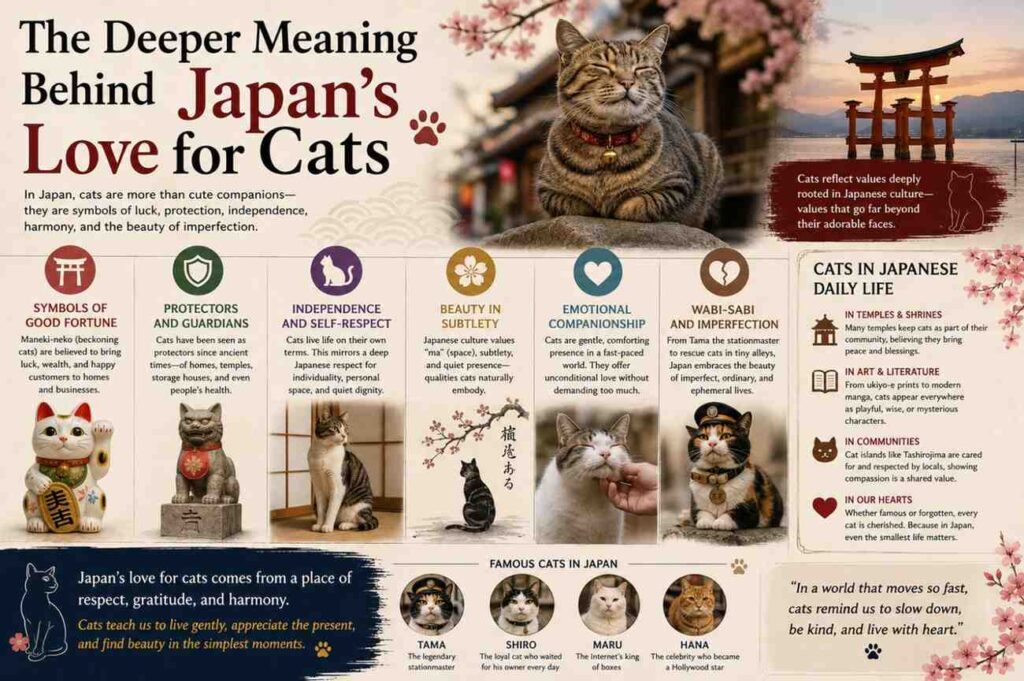
Japan’s love for cats is not based on one reason. It comes from a blend of history, symbolism, lifestyle, storytelling, design, and emotion.
Historically, cats protected valuable goods. Spiritually, they became connected with luck and mystery. In folklore, they became magical and sometimes frightening. In business, they became symbols of prosperity. In modern cities, they became sources of comfort. In pop culture, they became cute and marketable icons.
This layered meaning is what makes Japanese cat culture so powerful. Cats are not only loved because they are adorable. They are loved because they can represent many different feelings at once.
A cat can be lucky, calming, funny, stylish, magical, or mysterious. It can belong in a temple, a shop, an apartment, a manga panel, a movie, or a social media post. Few animals move so easily between tradition and modern life.
Conclusion
Japanese cat culture is a beautiful mix of old tradition and modern creativity. Cats in Japan are lucky charms, folklore figures, café companions, anime characters, tourist attractions, and beloved pets. They appear in temples, homes, businesses, islands, books, movies, and social media feeds.
The popularity of cats in Japan comes from their unique ability to fit many cultural roles. They are independent but comforting, mysterious but cute, practical but symbolic. From maneki-neko to cat cafés, from Tashirojima to Hello Kitty, cats have become part of how Japan expresses luck, comfort, beauty, and imagination.
In the end, the reason cats are so popular in Japan is simple but deep: they match the Japanese love for subtle charm, meaningful symbols, peaceful companionship, and playful design. Cats are not just animals in Japan. They are cultural icons.
FAQs
Why are cats so popular in Japan?
Cats are popular in Japan because they combine cuteness, mystery, independence, and symbolism. They have historical roots as protectors of valuable goods, cultural importance as lucky symbols, and modern appeal through cat cafés, anime, manga, social media, and tourism.
What is maneki-neko?
Maneki-neko is the Japanese beckoning cat or lucky cat figurine. It usually shows a cat with one paw raised, inviting good fortune, customers, money, or happiness. It is commonly seen in shops, restaurants, homes, and businesses.
Are cat cafés originally from Japan?
The cat café concept did not originate in Japan globally, but Japan helped make cat cafés internationally famous. Japan’s first cat café, Neko no Jikan, opened in Osaka in 2004 and helped popularize the trend across Japanese cities.
What is the most famous cat island in Japan?
Tashirojima in Miyagi Prefecture is one of Japan’s most famous cat islands. It is known for its semi-wild cats, fishing traditions, and cat shrine. The island’s cats were historically valued for protecting silkworm production from rats.
Why is February 22 Cat Day in Japan?
February 22 is Cat Day in Japan because the number two is pronounced “ni” in Japanese. The date 2/22 sounds like “ni-ni-ni,” which resembles “nyan-nyan-nyan,” the Japanese sound for a cat’s meow.