


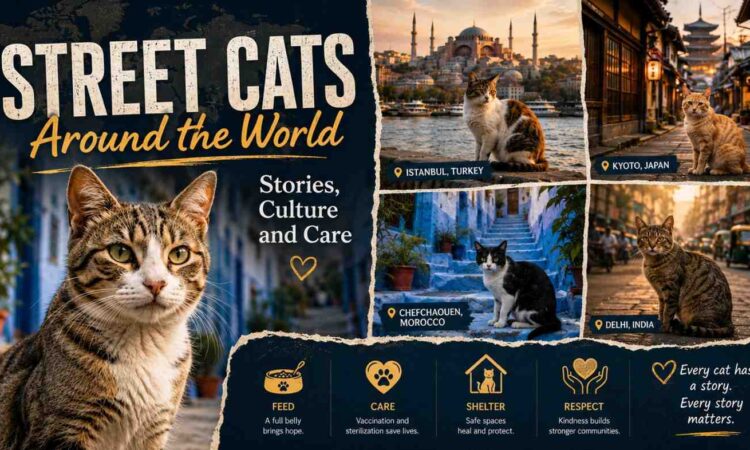
Street Cats Around the World: Stories, Culture and Care
Street cats are more than just animals wandering alleys and rooftops. They are survivors, companions, cultural symbols, and in many places, silent members of the urban community. From the bustling markets of Istanbul to the quiet temples of Kyoto, street cats have carved out a unique place in human society. Their stories reveal a fascinating mix of resilience, tradition, and compassion.
The Global Presence of Street Cats
Walk through almost any major city in the world, and chances are you’ll spot a cat lounging in the sun, weaving through market stalls, or watching the world from a windowsill. Street cats exist on every continent except Antarctica, adapting to climates as different as the humid streets of Southeast Asia and the snowy alleys of Eastern Europe.
What makes street cats so universal? Part of the answer lies in their extraordinary adaptability. Cats are natural hunters, capable of surviving on small prey, scraps, and human generosity. Cities, with their abundance of food waste and shelter, create ideal environments for feline survival. But the story is not just biological. Human culture plays an equally important role. In some places, cats are revered and protected; in others, they are overlooked or seen as a nuisance. This diversity of attitudes shapes the lives of millions of street cats worldwide.
A Brief History of Cats Living Alongside Humans
Cats began their relationship with humans around 9,000 years ago in the Near East, where wildcats were drawn to grain stores filled with rodents. Unlike dogs, which were actively domesticated, cats essentially chose to live near humans because it benefited them. Over centuries, they became companions, pest controllers, and symbols in religion and art.
Yet not all cats became house pets. As cities grew, so did populations of free-roaming cats. Ports, marketplaces, farms, and temples became hubs for feline communities. Sailors carried cats across oceans to control rats on ships, helping spread them around the globe. Today’s street cats are descendants of both domesticated cats and their more independent ancestors, living in the space between wild and tame.
Why Street Cats Thrive in Cities
Urban ecosystems and food sources
Cities may seem harsh, but for cats they can function like giant ecosystems. Restaurants discard food, markets attract rodents, and abandoned buildings provide shelter. Even small acts of kindness—someone leaving out water or leftovers—can sustain a colony.
Street cats are also masters of territory. They learn which alleys are safe, which shops are friendly, and where food appears at certain times of day. In many cities, entire colonies develop around restaurants, fish markets, or apartment complexes. These colonies often have social structures, with dominant cats, mothers caring for kittens, and communal resting spots.
Adaptability and survival instincts
Cats possess a rare combination of independence and intelligence. They can climb, hide, hunt, and avoid danger with remarkable skill. Their nocturnal tendencies help them navigate busy cities more safely at night. Even so, life on the streets is difficult. The average lifespan of a street cat is far shorter than that of an indoor cat due to disease, accidents, and lack of medical care.
Istanbul: The City That Loves Its Cats


Cats as part of Turkish culture
Few cities are as famous for their street cats as Istanbul. Here, cats are not merely tolerated—they are cherished. Turkish culture, influenced by Islamic traditions that value kindness to animals, has long embraced cats as companions of the city. Legends about the Prophet Muhammad’s affection for cats are widely known and contribute to a culture of respect toward them.
In Istanbul, cats wander freely through mosques, cafes, bookstores, and ferries. Locals often know neighborhood cats by name and personality. Some cats become minor celebrities, attracting tourists who photograph them lounging against centuries-old architecture.
Community care and feeding stations
The city’s relationship with cats is supported by practical care. Municipalities and residents maintain feeding stations and water bowls throughout neighborhoods. Volunteers organize veterinary care and sterilization programs, helping manage populations humanely.
This coexistence was beautifully captured in the documentary Kedi, which followed several Istanbul cats and the humans who cared for them. The film showed how street cats can become emotional anchors in urban life, offering comfort and connection in a fast-moving city.
Japan’s Cat Islands and Temple Cats


Aoshima and Tashirojima
Japan offers one of the most unique street-cat cultures in the world. On islands like Aoshima and Tashirojima, cats famously outnumber human residents. These “cat islands” became popular tourist destinations after photos of their feline populations spread online.
The cats were originally kept to control rodents, but over time they became central to the islands’ identity. Visitors arrive not just to see cats, but to experience a slower, quieter way of life shaped by coexistence with animals.
Cats in Japanese folklore and spirituality
Cats also hold a special place in Japanese folklore. The maneki-neko, or “beckoning cat,” is a symbol of good luck found in shops and homes across Japan. Temple and shrine cats are often cared for by local communities, and some are believed to bring protection or fortune.
At the same time, Japan faces challenges with stray cat populations in urban areas. Many cities support TNR programs, and animal welfare organizations work to reduce abandonment and improve adoption rates.
Rome: Ancient Ruins, Modern Cat Colonies


The Largo di Torre Argentina sanctuary
In Rome, street cats live among the ruins of one of history’s greatest civilizations. The most famous colony resides at Largo di Torre Argentina, an archaeological site where dozens of cats roam among ancient temples. Volunteers operate a sanctuary there, providing food, medical care, and adoption services.
The image of cats resting on Roman ruins feels almost symbolic: independent creatures inhabiting the layers of history. Tourists flock to the site, but the sanctuary’s mission is deeply practical—protecting cats through sterilization and care.
Cats as guardians of history
Romans have long had a complicated affection for cats. During the Middle Ages, attitudes fluctuated, but in modern Rome, cats are widely seen as part of the city’s charm. Some locals even describe them as guardians of the ruins, keeping rodent populations in check while adding life to historic spaces.
Morocco’s Medina Cats


Cats in Islamic tradition
In Morocco, especially in cities like Marrakech and Fez, cats are everywhere in the medinas. Islamic tradition generally encourages compassion toward cats, and many residents feed them regularly. Cats often gather near mosques, markets, and food stalls, moving gracefully through the maze-like streets.
Life among the souks and streets
Life for Moroccan street cats is a mix of hospitality and hardship. While many people feed them, veterinary care and sterilization are less accessible in some areas. Local rescue groups have grown in recent years, working to provide medical treatment and promote humane population control. Travelers often notice how naturally cats blend into daily life in the medina, as if they are part of the architecture itself.
Latin America’s Street Cat Communities


Cats in Mexico City and Buenos Aires
Across Latin America, street cats are a common sight in plazas, parks, and neighborhoods. In Mexico City, colonies can be found near markets and residential areas, while Buenos Aires has long been known for its community-managed cat colonies in parks and cemeteries.
These cities illustrate how grassroots action can make a difference. Volunteers often organize feeding schedules, raise money for sterilization, and coordinate adoptions through social media. In many cases, ordinary citizens—not large institutions—become the backbone of street-cat welfare.
Grassroots rescue movements
Social media has transformed rescue efforts in Latin America. Instagram and Facebook pages dedicated to local cats help find adopters, fund surgeries, and spread awareness about responsible pet ownership. The movement is fueled by compassion, but also by recognition that unmanaged cat populations can lead to suffering for both animals and communities.
The Challenges Street Cats Face Worldwide
Disease, injury, and malnutrition
Life on the streets is rarely romantic. Street cats face constant threats: infections, parasites, untreated injuries, harsh weather, and hunger. Kittens are especially vulnerable, with many not surviving their first year. Access to clean water and nutritious food is inconsistent, and medical care is often nonexistent without human intervention.
Overpopulation and abandonment
One of the biggest challenges is overpopulation. A single unspayed female cat can produce multiple litters each year, and populations can grow rapidly. Abandonment by owners worsens the problem. Cats left behind after moves, financial hardship, or impulse adoptions often join existing colonies, increasing competition for resources.
Human conflict and urban development
Street cats can also become caught in conflicts with humans. Some residents view them as pests due to noise, odor, or concerns about wildlife. Urban development may destroy habitats where colonies have lived for years. Without humane management, responses can become harmful or ineffective, simply displacing cats rather than solving the underlying issue.
The Importance of Trap-Neuter-Return (TNR)
How TNR works


One of the most effective and widely supported methods for managing street cat populations is Trap-Neuter-Return (TNR). The process is straightforward:
- Cats are humanely trapped.
- They are taken to a veterinarian for sterilization, vaccination, and basic health checks.
- After recovery, they are returned to their original territory.
Sterilized cats can no longer reproduce, and vaccinated cats are healthier and less likely to spread disease. Because they are returned to familiar territory, they continue to occupy the space, preventing new unsterilized cats from moving in.
Proven benefits for communities and cats
Studies and animal welfare organizations worldwide have shown that TNR reduces colony sizes over time, decreases nuisance behaviors like fighting and spraying, and improves overall cat welfare. It is considered more humane and effective than removal or euthanasia-based approaches, which often fail because new cats quickly replace those removed.
How Local Communities Make a Difference


Volunteers, shelters, and veterinarians
Behind almost every well-managed cat colony is a network of dedicated people. Volunteers feed cats, monitor their health, and arrange veterinary visits. Shelters and rescue organizations provide medical care, foster homes, and adoption services. Veterinarians play a crucial role by offering affordable sterilization programs and emergency treatment.
These efforts are often unpaid and emotionally demanding. Caregivers may spend years looking after the same colony, knowing each cat individually. Their work highlights a powerful truth: compassion at the local level can transform lives, even without massive resources.
Education and responsible pet ownership
Long-term change depends on education. Encouraging people to spay and neuter pets, avoid abandonment, and adopt rather than buy can significantly reduce the number of cats ending up on the streets. Schools, community centers, and social campaigns all have a role to play in building a culture of responsible animal care.
Traveling Responsibly Around Street Cats


Ethical tourism and animal welfare
For travelers, encountering street cats can be one of the most memorable parts of a trip. But it’s important to interact responsibly. Feeding a cat once may feel kind, but inconsistent feeding can sometimes create dependency without long-term support. A better approach is to support local rescue groups or donate to community care programs.
What visitors should and shouldn’t do
Here are a few simple guidelines for travelers:
- Do observe cats respectfully and avoid disturbing sleeping or nursing cats.
- Do wash your hands after touching animals.
- Do support local shelters, sanctuaries, or TNR programs.
- Don’t try to take a street cat home without understanding local laws and the cat’s needs.
- Don’t encourage risky behavior for photos, such as placing cats in unsafe positions.
- Don’t assume every friendly cat is homeless; some free-roaming cats have owners.
Responsible tourism means appreciating animals as part of local communities, not as props for social media.
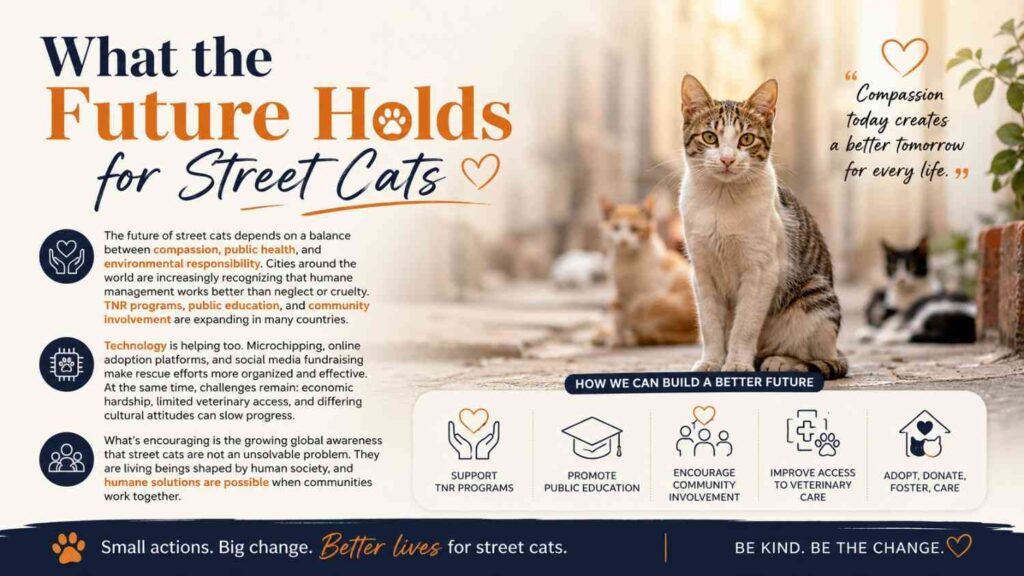
What the Future Holds for Street Cats
The future of street cats depends on a balance between compassion, public health, and environmental responsibility. Cities around the world are increasingly recognizing that humane management works better than neglect or cruelty. TNR programs, public education, and community involvement are expanding in many countries.
Technology is helping too. Microchipping, online adoption platforms, and social media fundraising make rescue efforts more organized and effective. At the same time, challenges remain: economic hardship, limited veterinary access, and differing cultural attitudes can slow progress.
What’s encouraging is the growing global awareness that street cats are not an unsolvable problem. They are living beings shaped by human society, and humane solutions are possible when communities work together.
Conclusion
Street cats tell a story about humanity as much as they do about animals. In Istanbul, they are beloved neighbors. In Japan, they are symbols of luck and tranquility. In Rome, they wander through history itself. Across Morocco, Latin America, and countless other places, they survive through a patchwork of human kindness and resilience.
Their lives are not easy, but they reveal something profound about cities: even in the busiest urban landscapes, there is room for unexpected companionship. Caring for street cats is not just about feeding animals. It is about building more compassionate communities, respecting local cultures, and recognizing our shared responsibility for the creatures that live beside us.
FAQs
Are street cats the same as feral cats?
Not always. Street cats is a broad term that includes both stray cats (once socialized with humans) and feral cats (born in the wild and not comfortable with human contact). Stray cats may adapt to home life again, while feral cats are usually better suited to managed outdoor colonies.
Is it safe to feed street cats while traveling?
It can be, but it’s best done thoughtfully. Occasional feeding is generally fine, but supporting local rescue groups or community feeding programs is more helpful in the long run. Always avoid feeding in ways that create litter or conflict with local residents.
What is the most effective way to help street cats?
Supporting Trap-Neuter-Return (TNR) programs is widely considered the most effective long-term solution. Donations, volunteering, fostering, and promoting responsible pet ownership also make a major difference.
Why do some cities embrace street cats while others remove them?
Cultural, religious, historical, and political factors all play a role. In some societies, cats are seen as valued community animals; in others, concerns about sanitation, wildlife, or urban policy lead to stricter control measures.
Can street cats become pets?
Many stray cats can become loving pets with patience and care, especially if they are friendly toward humans. Feral cats, however, are often happiest remaining outdoors in managed colonies where they are fed and medically cared for.