

Why High-Protein Nutrition Matters for Cats
If there is one thing every cat owner should understand, it is that cats are not small dogs. Their nutritional needs are completely different. Cats evolved as hunters, surviving on prey rich in animal protein and moisture. Because of this evolutionary history, their bodies are designed to process protein efficiently and use it as a primary source of energy. Unlike humans who can thrive on a wide variety of foods, cats rely heavily on nutrients that naturally occur in animal tissues.
Modern veterinary nutrition research continues to support the importance of protein-rich diets for felines. According to recent 2026 cat food analyses, many premium cat foods now contain 38% to 48% protein, significantly above the minimum requirements established by nutritional guidelines. Experts emphasize that quality matters just as much as quantity. Animal-based proteins provide amino acids that are easier for cats to digest and utilize compared to plant-based alternatives. (VetKriter)
When cats consume enough high-quality protein, they maintain stronger muscles, healthier organs, improved immune function, and better overall vitality. Protein acts like the building blocks of a house. Without enough building materials, the structure weakens over time. The same principle applies to your cat’s body. Adequate protein supports tissue repair, growth, and long-term wellness.
Cats Are Obligate Carnivores
The term “obligate carnivore” means cats must eat animal-based foods to survive and thrive. Their bodies require nutrients such as taurine, arachidonic acid, and vitamin A in forms naturally found in animal tissues. Unlike some other animals, cats cannot efficiently manufacture these nutrients on their own.
This biological requirement explains why many veterinarians recommend diets with meat, poultry, or fish listed as the first ingredient. Foods dominated by corn, wheat, soy, or other plant proteins may technically meet minimum protein requirements, but they often fail to deliver the same nutritional quality. High-protein cat foods that prioritize animal ingredients more closely resemble what cats would naturally consume in the wild. (Pet Autumn)
The Role of Protein in Overall Health
Protein is responsible for countless functions inside a cat’s body. It supports muscle growth, hormone production, enzyme activity, immune defense, and tissue repair. Active cats, growing kittens, and senior cats especially benefit from adequate protein intake because their bodies constantly require amino acids to maintain health.
Many pet owners notice visible improvements when switching to protein-rich diets. Common benefits include shinier coats, healthier skin, improved energy levels, and stronger muscle tone. While protein is not a magical solution for every health issue, it remains one of the most critical nutritional components in a cat’s daily diet.
What Counts as High-Protein Cat Food in 2026
One of the biggest misconceptions among cat owners is assuming every food labeled “high protein” truly delivers superior nutrition. Marketing claims can be misleading. Understanding the numbers behind the label is essential when selecting food for your feline companion.
According to recent veterinary nutrition reviews, standard adult cat foods often contain around 26% to 32% protein. Premium high-protein formulas generally contain 38% or more protein, with some reaching 40% to 48%. These products focus heavily on animal-derived ingredients and often reduce unnecessary carbohydrates. (VetKriter)
Understanding Protein Percentages
Protein percentages listed on packaging represent crude protein levels. While useful, these figures do not tell the entire story. A food can technically achieve a high protein percentage through plant ingredients such as pea protein or corn gluten. Although these ingredients contribute protein, they may not provide the same biological value as meat-based proteins.
The smartest approach is to examine the ingredient list alongside the protein percentage. Look for named animal proteins such as chicken, turkey, salmon, duck, or beef appearing among the first ingredients.
Dry Matter Basis Explained
Comparing wet and dry cat food can be confusing because moisture levels differ dramatically. Wet foods contain approximately 75% to 80% water, while dry foods usually contain around 10% moisture. Nutrition experts often use dry matter calculations to compare products accurately. (Pet Autumn)
For example, a wet food showing 10% protein may actually provide more protein than expected once moisture is removed from the equation. This calculation helps cat owners make informed comparisons between canned and kibble products.
Benefits of High-Protein Cat Food
Feeding your cat a protein-rich diet offers numerous advantages beyond simple nutrition. Think of protein as premium fuel for a high-performance vehicle. The better the fuel quality, the better the engine performs.
Muscle Development and Maintenance
Muscle health is one of the most noticeable benefits of a high-protein diet. Cats naturally possess lean, athletic bodies designed for climbing, jumping, and hunting. Adequate protein helps maintain muscle mass throughout all life stages.
Senior cats especially benefit because aging often leads to gradual muscle loss. Protein-rich foods provide the amino acids necessary to preserve strength and mobility. This support can help older cats remain active and comfortable for longer periods.
Weight Management Support
Many cat owners assume weight control requires reducing food intake dramatically. In reality, protein often plays a major role in maintaining a healthy body composition. Protein promotes satiety, helping cats feel fuller after meals.
High-protein diets may also encourage lean muscle development, which naturally supports healthy metabolism. Combined with portion control and regular activity, protein-rich foods can help prevent obesity while preserving valuable muscle tissue. (Pet Autumn)
Improved Energy Levels
Cats receiving sufficient animal protein often display consistent energy levels and improved vitality. Protein provides essential amino acids that support cellular function throughout the body.
Owners frequently report increased playfulness, better stamina, and healthier appearance after transitioning to premium protein-focused diets. While individual results vary, balanced nutrition lays the foundation for overall wellness.
Key Ingredients to Look For
Choosing the best high-protein cat food requires looking beyond marketing slogans. Ingredient quality remains one of the strongest indicators of nutritional value.
Animal-Based Protein Sources
The best high-protein cat foods feature ingredients such as:
- Chicken
- Turkey
- Salmon
- Duck
- Beef
- Lamb
- Fish meal
- Chicken meal
Many nutrition experts note that meat meals are not necessarily inferior. Because moisture has already been removed, quality meat meals can provide concentrated protein levels and valuable amino acids.
Essential Amino Acids and Taurine
Taurine deserves special attention because cats cannot produce enough of it independently. Deficiencies may lead to serious health problems affecting vision and heart function.
Premium high-protein foods typically contain added taurine alongside naturally occurring amino acids from animal ingredients. Always verify that your chosen food meets complete and balanced nutritional standards. (PetMD)
Ingredients to Avoid
Not every cat food marketed as healthy deserves a place in your cat’s bowl.
Excessive Fillers and Plant Proteins
Some manufacturers increase protein percentages using inexpensive plant ingredients. While these ingredients are not automatically harmful, they should not replace high-quality animal proteins as the primary protein source.
Recent cat nutrition discussions highlight that grain-free labels can also be misleading. Some grain-free products substitute grains with potatoes, peas, or lentils, resulting in carbohydrate levels that remain relatively high.
Artificial Additives
Artificial colors, flavors, and unnecessary preservatives add little nutritional value. Most premium cat foods now focus on simpler ingredient lists with recognizable components and minimal processing.
Best High-Protein Cat Foods in 2026
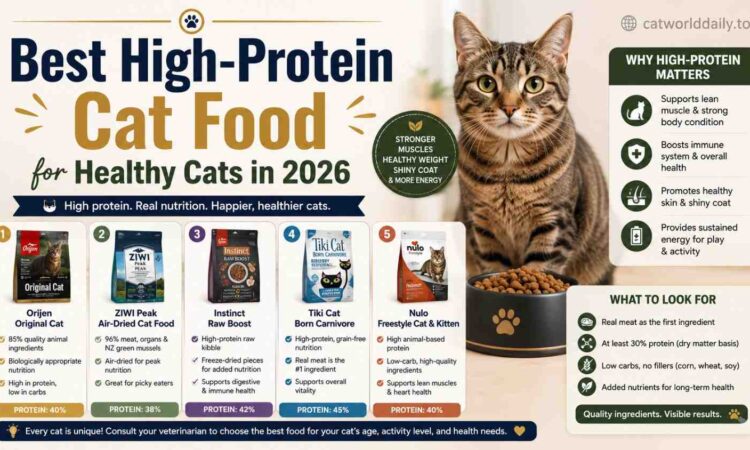
The following products consistently appear in veterinary reviews, nutrition analyses, and expert recommendations for 2026. (VetKriter)
| Cat Food | Protein Level | Best For |
|---|---|---|
| ORIJEN Original Cat | 40% | Overall nutrition |
| Acana Highest Protein Indoor Cat | 38% | Indoor cats |
| Tiki Cat Born Carnivore | 42% | Kittens |
| Instinct Ultimate Protein | 48% | Active cats |
| Wellness CORE Grain-Free | 42% | Budget-conscious owners |
| Ziwi Peak Canned | 48% (DMB) | Wet food lovers |
Best Dry Cat Foods
ORIJEN continues to dominate many expert rankings because of its strong emphasis on animal ingredients and impressive protein content. Acana also remains popular among cat owners seeking balanced nutrition without excessive carbohydrates. Instinct Ultimate Protein stands out for exceptionally high protein percentages and meat-focused recipes. (Pet Autumn)
Best Wet Cat Foods
Wet foods often provide higher moisture content while maintaining impressive protein levels. Ziwi Peak and Tiki Cat are frequently recommended for cats requiring hydration support alongside premium nutrition. These products typically contain fewer carbohydrates and more animal-derived ingredients than many traditional canned foods. (Petzooie)
Best Budget-Friendly Options
Premium nutrition does not always require premium pricing. Wellness CORE and Taste of the Wild offer strong protein profiles while remaining more affordable for multi-cat households. These options provide excellent value without sacrificing essential nutritional quality. (Petzooie)
Wet vs Dry High-Protein Cat Food
The debate between wet and dry food continues among cat owners and veterinarians alike. Both formats offer advantages when chosen carefully.
Wet food naturally provides hydration, which can benefit urinary tract health and overall wellness. Many wet formulas also contain fewer carbohydrates and closely mimic a cat’s natural prey diet. Dry food, meanwhile, offers convenience, affordability, and easier storage.
For many healthy cats, a combination feeding approach delivers the best of both worlds. Wet food can increase moisture intake, while dry food provides flexibility and convenience. The ideal choice depends on your cat’s preferences, health status, and lifestyle.
How to Transition Your Cat Safely
Switching cat food too quickly can cause digestive upset. A gradual transition helps your cat adjust comfortably.
A common recommendation is:
- Days 1–3: 75% old food, 25% new food
- Days 4–6: 50% old food, 50% new food
- Days 7–9: 25% old food, 75% new food
- Day 10: 100% new food
Observe your cat closely during the transition. Monitor appetite, stool quality, energy levels, and overall behavior. If concerns arise, consult your veterinarian before making additional dietary changes.
Common Mistakes Cat Owners Make
One frequent mistake is focusing exclusively on protein percentages while ignoring ingredient quality. A food with 40% protein from poor sources may be less beneficial than one with slightly lower protein from premium animal ingredients.
Another mistake involves assuming more protein is always better. Healthy cats generally thrive on high-protein diets, but cats with certain medical conditions may require specialized nutrition plans. Veterinary guidance becomes especially important for cats with kidney disease or other chronic health concerns. (Pet Autumn)
Owners also sometimes overlook hydration. Even the highest-quality food cannot fully compensate for inadequate water intake. Encouraging hydration through wet food, fountains, and multiple water stations supports long-term health.
Conclusion
Choosing the best high-protein cat food for healthy cats in 2026 involves more than selecting the product with the highest number on the package. True quality comes from animal-based protein sources, balanced nutrition, appropriate moisture levels, and ingredients that support your cat’s unique needs.
Current veterinary recommendations continue to favor diets rich in animal protein because cats are obligate carnivores whose bodies are designed to thrive on meat-focused nutrition. Whether you choose ORIJEN, Acana, Tiki Cat, Instinct, Wellness CORE, or another reputable brand, prioritizing protein quality over marketing claims can make a meaningful difference in your cat’s health, energy, and longevity.
FAQs
1. What protein percentage should healthy adult cats eat?
Most experts consider foods containing 38% or more protein to be high-protein options for healthy adult cats. Quality animal-based protein sources are equally important.
2. Is high-protein cat food safe for all cats?
Healthy cats generally thrive on high-protein diets. Cats with kidney disease or specific medical conditions may require specialized dietary recommendations from a veterinarian.
3. Is wet or dry food better for protein intake?
Both can provide excellent protein levels. Wet food offers additional hydration, while dry food provides convenience and longer shelf life.
4. How do I know if a cat food contains quality protein?
Look for named animal proteins such as chicken, salmon, turkey, or beef among the first ingredients rather than plant protein concentrates.
5. Can kittens eat high-protein cat food?
Yes. Kittens require significant amounts of protein for growth and development. Choose formulas specifically designed for kittens to ensure complete nutrition.