

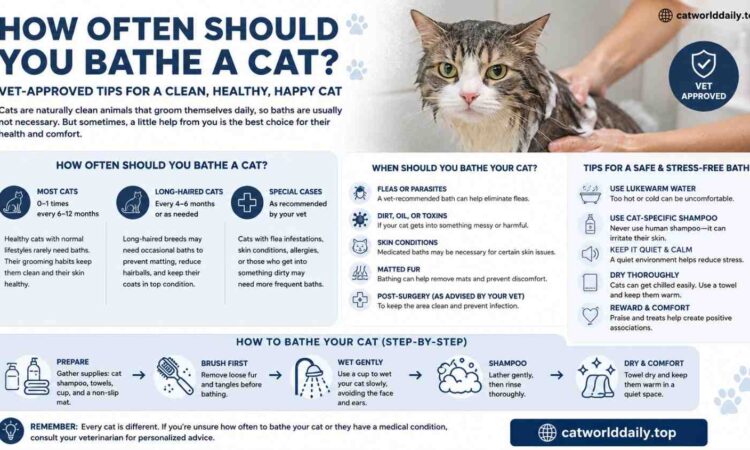
Most healthy cats do not need regular baths. Unlike dogs, cats are naturally excellent self-groomers. Their tongues, teeth, and flexible bodies help them remove dirt, loose hair, and everyday debris from their coat. In fact, VCA Animal Hospitals notes that most healthy adult cats are fastidious groomers and rarely require a bath. (Vca)
So, how often should you bathe a cat? For most indoor cats, the answer is simple: only when needed. That may mean after your cat gets into something sticky, smelly, greasy, toxic, or too dirty to clean safely on their own.
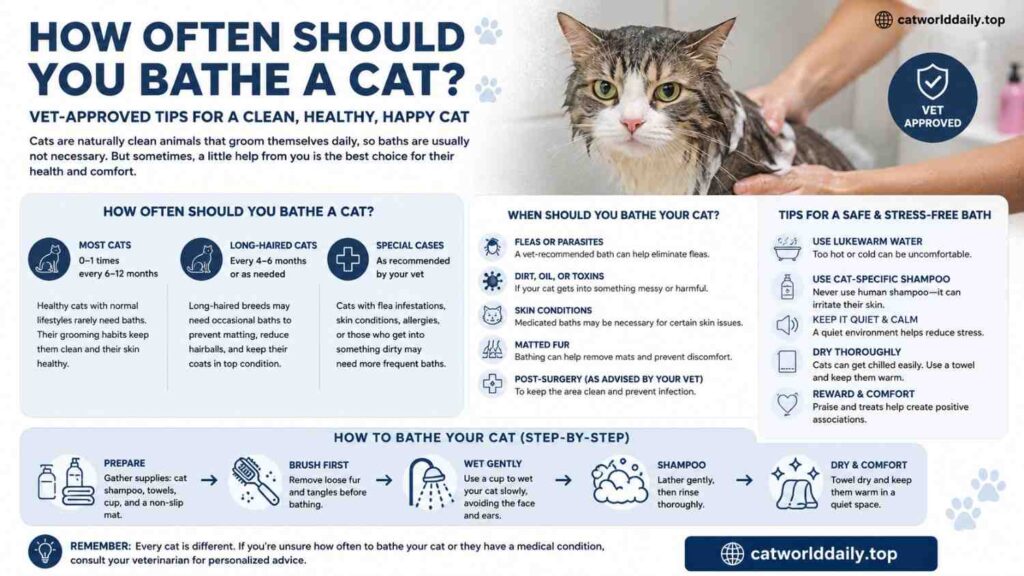
Quick Answer: How Often Should You Bathe a Cat?
For a healthy indoor cat, bathing is usually needed only occasionally, not on a fixed weekly or monthly schedule.
A good rule of thumb:
| Cat Type | Bathing Frequency |
|---|---|
| Healthy indoor cat | Only when dirty, sticky, or smelly |
| Long-haired cat | As needed, plus regular brushing |
| Senior, overweight, or arthritic cat | Occasional baths may be needed |
| Outdoor cat | As needed after dirt, odor, or exposure |
| Cat with skin allergies or infection | Follow your vet’s schedule |
| Hairless cats like Sphynx | More frequent baths may be needed |
If your cat suddenly needs frequent baths because of odor, greasy fur, dandruff, mats, or poor grooming, it is better to speak with a veterinarian instead of simply bathing more often. VCA explains that changes in coat condition may point to health, weight, pain, or mobility problems. (Vca)
Do Cats Really Need Baths?
Most cats do not need routine baths because they already groom themselves many times a day. Their grooming helps remove loose hair, dirt, and debris while spreading natural skin oils through the coat.
However, there are situations where a bath can be helpful or necessary. The ASPCA says cats are well-equipped to handle their own hair care needs, but a bath may be needed if a cat becomes very dirty or gets into something sticky or smelly. (ASPCA)
When Should You Bathe a Cat?
You may need to bathe your cat if:
1. Your Cat Gets Into Something Sticky or Smelly
If your cat steps in oil, mud, food, paint, or something with a strong odor, brushing alone may not be enough. A bath can help remove the mess before your cat licks it off and possibly swallows something harmful.
2. Your Cat Has Trouble Grooming
Senior cats, overweight cats, and cats with arthritis may struggle to reach certain areas of the body. VCA notes that arthritic or overweight cats may need occasional baths to remove loose hair and unpleasant odors. (Vca)
3. Your Cat Has a Skin Condition
Cats with allergies, bacterial skin infections, yeast infections, or other skin problems may need medicated baths. VCA says medicated shampoo may be prescribed by a veterinarian for skin infections or allergies, and in many cases, medicated baths may be recommended weekly depending on the condition. (Vca)
4. Your Cat Has Fleas or Parasites
If your cat has fleas, do not grab any random shampoo. Many flea products that are safe for dogs can be dangerous for cats. Ask your vet for a cat-safe flea treatment plan.
5. Your Cat Is a Hairless Breed
Hairless cats, such as Sphynx cats, often need more skin care than furry cats because they do not have a coat to absorb natural oils. Their bathing schedule can be very different from a regular short-haired or long-haired cat.
How Often Is Too Often to Bathe a Cat?
Bathing too often can dry out your cat’s skin, irritate the coat, and cause stress. If your cat is healthy and clean, frequent bathing is usually unnecessary.
VCA recommends discussing frequent bathing with your veterinarian because repeated baths may require a dry shampoo, medicated shampoo, or conditioning rinse to prevent skin problems. (Vca)
What Shampoo Should You Use for Cats?
Use only a cat-safe shampoo. Do not use human shampoo, baby shampoo, dish soap, or dog shampoo unless your vet specifically tells you to.
VCA clearly states that cats should only be bathed with shampoo formulated for cats because cat skin has a different thickness and pH than human skin. Human shampoo, including baby shampoo, can be too harsh. (Vca)
For routine baths, choose:
- Cat-specific shampoo
- Hypoallergenic formula
- No strong perfumes
- Gentle moisturizing ingredients
- Vet-recommended medicated shampoo if prescribed
How to Bathe a Cat Safely
Bathing a cat can be stressful, so preparation matters. Here is a safe step-by-step method.
Step 1: Brush First
Brush your cat before the bath to remove loose hair and small tangles. This is especially important for long-haired cats because mats can become tighter after getting wet. VCA warns that tangles may become impossible to remove after bathing. (Vca)
Step 2: Trim the Nails
If your cat allows it, trim the nails before bath time. This helps protect both you and your cat from scratches.
Step 3: Use Lukewarm Water
Use warm, not hot, water. The ASPCA recommends filling the sink or tub with a few inches of lukewarm water and using a rubber bath mat to prevent slipping. (ASPCA)
Step 4: Avoid the Face, Eyes, Nose, and Ears
Do not spray water directly into your cat’s face, ears, eyes, or nose. Use a damp washcloth to gently clean the face if needed.
Step 5: Shampoo Gently
Massage the cat-safe shampoo in the direction of hair growth. Do not scrub aggressively. Keep the bath calm and quick.
Step 6: Rinse Thoroughly
Rinse all shampoo from the coat. Leftover shampoo can irritate your cat’s skin and attract more dirt. The ASPCA also stresses thorough rinsing to remove residue. (ASPCA)
Step 7: Dry in a Warm Place
Wrap your cat in a large towel and keep them in a warm, draft-free area until dry. If your cat tolerates a dryer, use only the lowest heat setting and keep it at a safe distance.
What If Your Cat Hates Baths?
Many cats dislike water. If your cat becomes extremely stressed, aggressive, or frightened, do not force the bath. The ASPCA advises making an appointment with a professional groomer or veterinarian if grooming could injure you or your cat. (ASPCA)
You can also try:
- Cat-safe grooming wipes
- Damp cloth cleaning
- Waterless cat shampoo
- More frequent brushing
- Professional grooming
- Vet grooming for senior or painful cats
Bathing vs. Brushing: Which Is More Important?
For most cats, brushing is more important than bathing.
Regular brushing removes dead hair, dirt, grease, and skin flakes. The ASPCA says brushing also stimulates blood circulation and supports skin condition, while one or two brushing sessions per week can help maintain a healthy coat. (ASPCA)
VCA also explains that all cats benefit from brushing, while long-haired, silky, or curly-coated cats may need daily brushing to prevent tangles and mats. (Vca)
Signs Your Cat May Need Grooming Help
Your cat may need extra grooming help if you notice:
- Greasy fur
- Bad odor
- Mats or tangles
- Dirt around the rear end
- Dandruff
- Reduced grooming
- Fleas or ticks
- Sticky patches
- Skin redness or irritation
- Sudden coat changes
If these signs appear suddenly, schedule a vet visit. Poor grooming can be linked to pain, obesity, dental disease, arthritis, stress, or illness.
Common Cat Bathing Mistakes to Avoid
Avoid these mistakes:
- Bathing too often
- Using human shampoo
- Using dog flea shampoo
- Spraying water directly on the face
- Skipping brushing before bathing
- Leaving shampoo residue
- Bathing in cold water
- Letting the cat dry in a cold room
- Forcing a terrified cat to continue
- Ignoring repeated odor or skin problems
Vet-Approved Final Recommendation
Most healthy cats should be bathed only when necessary. A normal indoor cat may go months or even years without needing a full bath. Instead of bathing on a schedule, focus on regular brushing, checking the skin and coat, and keeping your cat’s environment clean.
Bathe your cat when they are dirty, sticky, smelly, unable to groom properly, or when your vet recommends it for a medical reason. If your cat seems to need frequent baths, talk to your veterinarian to find out why.
FAQ
How often should you bathe an indoor cat?
Most indoor cats do not need routine baths. Bathe them only when they are dirty, sticky, smelly, or unable to groom themselves properly.
Can I bathe my cat once a month?
Some cats may tolerate monthly baths, but most healthy cats do not need them. Over-bathing can dry the skin and cause stress.
Is it okay to never bathe a cat?
Yes, many healthy cats never need a full bath. Regular brushing and coat checks are usually enough.
What happens if I bathe my cat too often?
Too many baths may dry out the skin, irritate the coat, and make your cat stressed or fearful.
Can I use baby shampoo on my cat?
No. VCA says baby shampoo and human shampoo are too harsh for cats because cat skin has a different pH and thickness. Use cat-formulated shampoo only. (Vca)
Should I bathe my cat if they have fleas?
Ask your vet first. Some flea shampoos and dog flea products can be unsafe for cats. A veterinarian can recommend a cat-safe flea treatment.