



Bringing home a new kitten is one of life’s most exciting experiences. Their tiny paws, endless curiosity, and playful energy can instantly fill a home with joy. Along with all the excitement comes an important responsibility: teaching your kitten where to go to the bathroom. Thankfully, litter training is one of the easiest aspects of kitten care because cats are naturally inclined to bury their waste. Unlike puppies that often require extensive house training, most kittens already have the instincts needed to learn proper litter box habits quickly. Veterinary experts explain that kittens can begin learning litter box behavior at around four weeks of age, and many adapt rapidly when provided with the right setup.
The key to successful litter training is understanding that you’re not teaching a completely new behavior. Instead, you’re guiding a natural instinct in the right direction. Think of it like providing a map for a traveler who already knows the destination. With a suitable litter box, the right type of litter, and consistent encouragement, your kitten can learn proper bathroom habits in just a few days. This comprehensive guide walks you through every step needed to make litter training smooth, stress-free, and successful.
Why Litter Training Is Important for Every Kitten
Understanding a Kitten’s Natural Instincts
Cats have survived in the wild for thousands of years by relying on instincts that help protect them from predators. One of those instincts is burying their waste. Covering waste helps conceal scent and keeps their environment cleaner. This behavior remains deeply rooted in domestic cats today, which is why litter training often feels surprisingly natural for them. Most kittens instinctively seek out soft, sandy materials when they need to eliminate.
When a kitten encounters a properly prepared litter box, the texture often triggers those natural instincts immediately. This gives pet owners a huge advantage compared to other forms of animal training. Instead of forcing behavior through repetition, you’re creating an environment that encourages instincts already present within the kitten. Understanding this principle makes the entire process easier and more enjoyable.
When to Start Litter Training
Timing matters when introducing litter training. Veterinary professionals recommend beginning around four weeks of age when kittens start becoming more independent from their mother. Before that stage, mother cats stimulate elimination and handle cleanup responsibilities. Once kittens begin exploring on their own, a litter box becomes an important part of their development.
Most kittens adopted at eight weeks or older have already had some exposure to litter boxes. Even so, moving into a new environment can temporarily confuse them. New smells, unfamiliar rooms, and changes in routine may cause occasional accidents. This is completely normal and shouldn’t be viewed as a failure. Patience and consistency during the first few days are often all that’s needed to establish reliable habits.
Preparing for Litter Training Success
Choosing the Right Litter Box
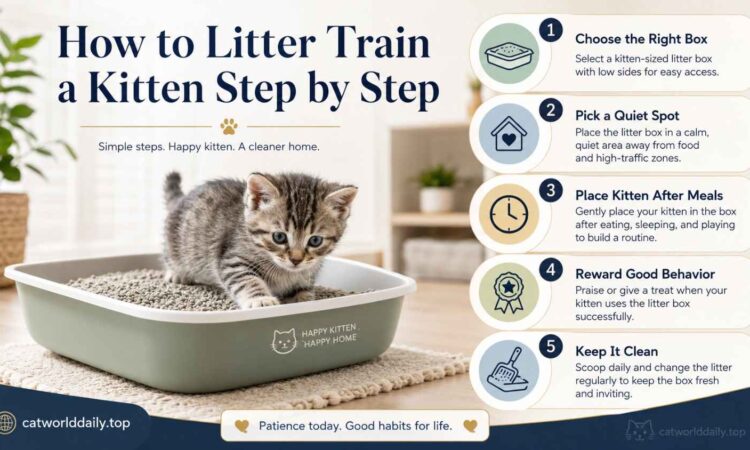
Selecting the right litter box is one of the most important decisions you’ll make during the training process. A box that is too large may intimidate a tiny kitten, while a box that is too small can become uncomfortable very quickly. Most experts recommend using a shallow litter box with low sides so kittens can easily climb in and out without assistance. The easier it is for your kitten to access the box, the more likely they are to use it consistently. According to animal behavior specialists, accessibility plays a major role in early litter training success. (petsmart.com)
Open litter boxes are generally better than covered ones for young kittens. While covered boxes may help contain odors and look cleaner to humans, they can feel cramped and intimidating to a kitten that is still exploring its surroundings. An open design allows your kitten to see its environment and feel safe while using the box. As your kitten grows older, you can experiment with different styles if desired.
The location of the litter box matters just as much as the box itself. Place it in a quiet, low-traffic area away from loud appliances and busy household activity. Imagine trying to use a bathroom located beside a constantly running washing machine. Most people would find that stressful, and kittens feel the same way. A calm environment encourages confidence and reduces accidents.
Selecting Safe and Comfortable Litter
Not all litter products are suitable for young kittens. Since kittens explore the world with their mouths, some may accidentally ingest litter while grooming or playing. For this reason, many veterinarians recommend avoiding clumping litter for very young kittens and choosing non-clumping varieties instead. Non-clumping litter reduces the risk of digestive complications if accidentally swallowed. (petmd.com)
Texture is another important consideration. Most kittens naturally prefer soft, sand-like litter because it resembles the materials their instincts tell them to use. Strongly scented litters may seem appealing to humans, but cats possess an incredibly sensitive sense of smell. Fragrances that seem mild to us can feel overwhelming to a kitten. Unscented litter often provides the most comfortable experience and encourages regular use.
Here’s a simple comparison of popular litter options:
| Litter Type | Best For | Potential Drawbacks |
|---|---|---|
| Non-Clumping Clay | Young kittens | Requires frequent replacement |
| Clumping Clay | Older kittens and adults | Not ideal for very young kittens |
| Paper Litter | Sensitive kittens | Less odor control |
| Wood Pellets | Eco-conscious owners | Some kittens dislike texture |
| Crystal Litter | Odor management | May feel uncomfortable on tiny paws |
The goal is to make the litter box as inviting as possible. A comfortable litter choice can significantly accelerate training success.
Finding the Best Location
Cats value privacy, safety, and convenience when choosing a bathroom spot. Your kitten is no different. Place the litter box somewhere easily accessible but away from food and water dishes. Cats naturally prefer to keep eating and elimination areas separate. This instinct comes from their wild ancestors and remains strong today.
If your home has multiple levels, place a litter box on each floor during the training period. Young kittens have small bladders and limited control, so long journeys to reach a litter box can lead to accidents. Easy access removes obstacles and increases the likelihood of success. Many cat behavior experts recommend the “one box per cat plus one extra” rule for multi-cat households, ensuring every cat always has access to a clean bathroom option.
Consistency is equally important. Once you choose a location, avoid moving the litter box frequently. Kittens rely heavily on routine and familiarity. Relocating the box repeatedly can create confusion and slow the learning process. Establish a permanent location whenever possible and allow your kitten time to become familiar with it.
Step-by-Step Litter Training Process
Step 1 – Introduce the Litter Box
The first official training step is introducing your kitten to the litter box. As soon as your kitten arrives home, gently place them inside the box and allow them to explore. There is no need to force interaction. Let curiosity take over naturally. Most kittens will sniff the litter, paw at the surface, and begin investigating the new environment.
Repeat these introductions several times throughout the day, particularly after meals and naps. These are the times when kittens are most likely to need the bathroom. By placing your kitten in the litter box during these moments, you create a connection between the urge to eliminate and the correct location. Over time, this association becomes automatic.
Many owners worry if their kitten immediately jumps out of the litter box. This is perfectly normal. The goal during the introduction phase is familiarity, not instant perfection. Every positive interaction helps build confidence and understanding.
Step 2 – Create a Consistent Routine
Routine is the secret ingredient that transforms occasional success into reliable litter box habits. Kittens thrive on consistency. They eat, sleep, play, and eliminate according to predictable patterns. By observing these patterns and gently guiding your kitten toward the litter box at the right moments, you can dramatically speed up the training process.
After every meal, place your kitten in the litter box. Do the same after naps and energetic play sessions. These periods are when kittens most commonly need to relieve themselves. Over time, your kitten begins associating those bodily urges with the litter box location. Think of it as creating a mental pathway. The more often the same route is followed, the stronger and more automatic it becomes.
Consistency extends beyond timing. Feed your kitten at regular intervals, keep the litter box in the same location, and maintain a predictable daily schedule. Sudden changes can create confusion, especially for young kittens still adjusting to their new home. The more stable the environment, the easier it becomes for your kitten to learn and remember appropriate bathroom habits.
It’s also helpful to limit access to large portions of the house during the first few days. A smaller, controlled environment allows your kitten to locate the litter box quickly when needed. As successful habits develop, you can gradually increase access to additional rooms without sacrificing training progress.
Step 3 – Watch for Potty Signals
Learning to recognize your kitten’s potty signals can prevent many accidents before they happen. Kittens often display clear behavioral clues when they need to use the bathroom. Common signs include sniffing the floor, circling a specific area, scratching at surfaces, suddenly stopping play, crouching, or appearing restless. These behaviors indicate that elimination is likely to occur soon.
When you notice these signals, calmly pick up your kitten and place them in the litter box. Avoid startling or scolding them. The goal is gentle guidance, not correction. Once inside the box, many kittens immediately begin digging or investigating the litter. Their natural instincts often take over from there.
Observing your kitten closely during the first week can significantly reduce accidents. Consider yourself a detective gathering clues. Every successful observation helps reinforce good habits while preventing mistakes. Over time, you’ll become highly familiar with your kitten’s routine and body language, making it easier to anticipate bathroom needs before accidents occur.
Some kittens communicate more clearly than others. If your kitten seems unpredictable, maintain frequent litter box visits throughout the day. This proactive approach often compensates for missed signals and keeps training on track.
Step 4 – Reward Good Behavior
Positive reinforcement is one of the most effective training methods available for cats. Whenever your kitten successfully uses the litter box, offer praise, gentle petting, or a small treat immediately afterward. This creates a positive association between the desired behavior and a rewarding experience.
Cats may not understand language the way humans do, but they quickly learn which actions produce positive outcomes. A warm tone of voice, affectionate attention, and occasional treats communicate that using the litter box is a good thing. Over time, these rewards strengthen the behavior until it becomes a consistent habit.
It’s important to reward immediately after successful litter box use. Delayed rewards can confuse the connection between action and consequence. The closer the reward is to the behavior, the more effective the learning process becomes. Think of it as reinforcing a bridge while it’s being built. Every positive experience adds another strong support beam.
Avoid overusing treats, however. Praise and affection should remain the primary rewards. Treats can serve as occasional bonuses rather than the sole motivation. This balanced approach helps maintain healthy eating habits while still encouraging positive behavior.
Solving Common Litter Training Problems
Accidents Outside the Box
Accidents are a normal part of the learning process. Even kittens with strong natural instincts occasionally make mistakes, especially during periods of adjustment. When an accident occurs, stay calm. Reacting with anger or punishment can create fear and anxiety, making future training more difficult.
Instead, clean the area thoroughly using an enzymatic cleaner designed to remove pet odors. Standard household cleaners may eliminate visible stains while leaving behind scent markers that encourage repeat accidents. A kitten’s sense of smell is far stronger than ours, so proper cleaning is essential.
Review the circumstances surrounding the accident. Was the litter box too far away? Was it dirty? Did something startle your kitten? Identifying the cause helps prevent similar situations in the future. Each accident provides valuable information about how to improve the training environment.
Most importantly, remember that accidents do not mean failure. They are simply temporary setbacks in a process that usually improves with consistency and patience.
Refusing to Use the Litter Box
If your kitten consistently avoids the litter box, several factors may be responsible. The first possibility is the litter itself. Some kittens dislike certain textures, scents, or materials. Experimenting with alternative litter types can sometimes solve the problem almost immediately.
The litter box location may also be an issue. A noisy, crowded, or difficult-to-access area can discourage use. Cats prefer privacy and security while eliminating. Relocating the box to a quieter space often improves acceptance.
Health concerns should also be considered. Although less common, urinary tract issues, digestive problems, and other medical conditions can affect litter box behavior. If avoidance continues despite proper training efforts, consult a veterinarian to rule out underlying health problems.
Successful litter training often requires a bit of troubleshooting. Like solving a puzzle, each adjustment brings you closer to understanding your kitten’s preferences and needs.
Multi-Cat Household Challenges
Training a kitten becomes slightly more complex when other cats already live in the home. While experienced cats can sometimes serve as positive role models, they can also create competition for litter box access. Cats are naturally territorial creatures, and some may guard litter boxes or discourage newcomers from using shared spaces.
The most effective solution is providing enough litter boxes for everyone. Cat behavior experts commonly recommend having one litter box per cat plus one extra. For example, if you have three cats, you should ideally provide four litter boxes. This setup reduces competition and ensures every cat always has access to a clean bathroom option.
Location matters just as much as quantity. Avoid placing all litter boxes side by side because cats may view them as a single resource. Instead, distribute them throughout the home in separate areas. This arrangement offers privacy and reduces the likelihood of territorial disputes. Observe interactions carefully during the first few weeks and make adjustments if necessary. A peaceful litter box environment helps every cat feel secure and encourages consistent use.
Long-Term Litter Box Success
Cleaning and Maintenance
Even the best-trained kitten can develop litter box issues if cleanliness is neglected. Cats are famously clean animals, and their standards often exceed our own. A litter box that seems acceptable to you may feel completely unusable to your kitten. Daily scooping is one of the most important habits you can develop as a cat owner.
Removing waste every day keeps odors under control and makes the litter box more inviting. Depending on the type of litter used, complete litter replacement should occur regularly according to manufacturer recommendations. The box itself should also be washed periodically using mild, unscented cleaning products. Strong chemical fragrances can discourage use and create unnecessary stress.
Think of the litter box as your kitten’s personal bathroom. Most people wouldn’t want to use a dirty restroom every day, and neither does your cat. Consistent maintenance protects the good habits you’ve worked hard to establish and helps prevent future behavioral problems.
Keeping Your Kitten Comfortable
As your kitten grows, their needs will change. A litter box that works perfectly for an eight-week-old kitten may become too small for an active adolescent cat. Regularly evaluate your setup to ensure it continues meeting your cat’s physical and emotional needs.
Monitor changes in behavior carefully. If your kitten suddenly hesitates before entering the litter box, begins eliminating nearby instead of inside, or shows signs of discomfort, investigate possible causes immediately. Sometimes the solution is as simple as a larger litter box, a different litter type, or a more convenient location.
Environmental stability also contributes to long-term success. Cats appreciate routine and predictability. Major changes such as moving homes, introducing new pets, or rearranging furniture can temporarily disrupt litter habits. During these transitions, extra patience and additional litter box access can help maintain consistency and reduce stress.
Conclusion
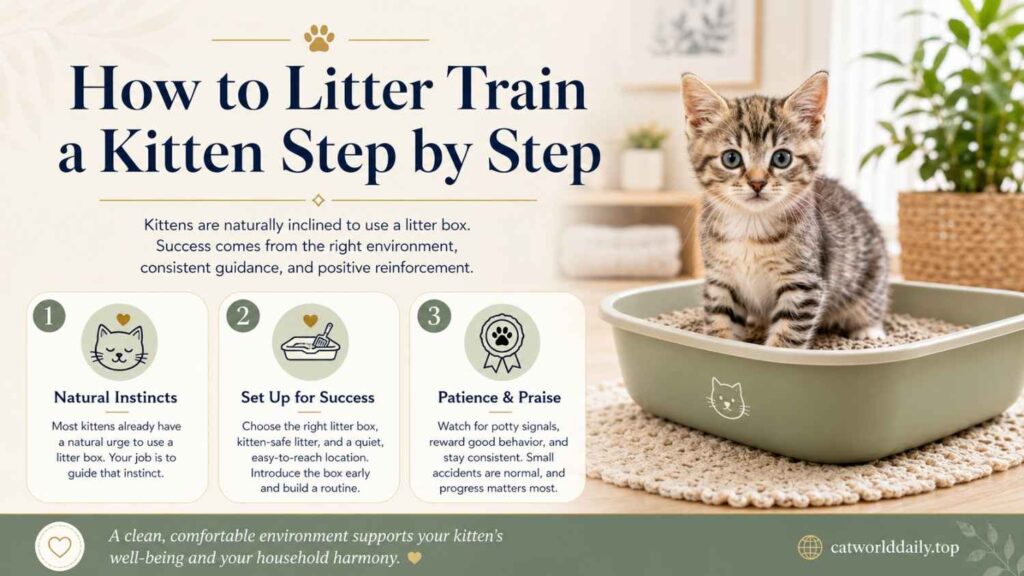
Learning how to litter train a kitten step by step is one of the most rewarding parts of welcoming a new feline companion into your home. Thanks to their natural instincts, most kittens are already inclined to use a litter box. Your role is simply to provide the right environment, consistent guidance, and positive reinforcement that allows those instincts to flourish.
Successful litter training begins with choosing an appropriate litter box, selecting kitten-safe litter, and placing everything in a quiet, accessible location. By introducing the litter box early, maintaining a predictable routine, watching for potty signals, and rewarding good behavior, you can help your kitten develop reliable habits quickly. Accidents may happen occasionally, but patience and consistency almost always lead to success.
Remember that every kitten learns at its own pace. Some may master litter box habits within days, while others require a few weeks of practice. Focus on progress rather than perfection, and celebrate each small success along the way. With the techniques outlined in this guide, you’ll create a clean, comfortable environment that supports both your kitten’s well-being and your household harmony.
FAQs
1. How long does it take to litter train a kitten?
Most kittens begin using a litter box within a few days, although complete consistency may take several weeks depending on age, personality, and previous experience.
2. What age should kittens start using a litter box?
Kittens typically begin learning litter box habits around four weeks of age as they become more independent from their mother.
3. Why does my kitten keep having accidents?
Accidents may occur because of stress, an unsuitable litter box location, dirty litter, unfamiliar surroundings, or simple inexperience during the learning phase.
4. Should I punish my kitten for accidents?
No. Punishment can create fear and anxiety, making litter training more difficult. Positive reinforcement and gentle guidance are far more effective.
5. What is the best litter for young kittens?
Many veterinarians recommend unscented, non-clumping litter for very young kittens because it is generally safer if accidentally ingested.

