


Bringing a new cat home is exciting. You imagine cuddles on the couch, playful zoomies around the house, and a furry companion following you everywhere. What most people don’t get excited about, however, is litter box training. The good news is that cats are naturally clean animals and usually learn much faster than dogs when it comes to bathroom habits. With the right approach, many kittens and adult cats can begin using a litter box consistently within just a few days. Experts note that cats are naturally attracted to loose, diggable substrates, making litter training one of the easiest aspects of cat ownership when done correctly. (Petfinder)
Litter box training is not about forcing your cat to learn. Instead, it is about creating an environment where using the litter box feels natural and comfortable. Think of it like setting up the perfect workspace for yourself. If everything is easy to find, clean, and convenient, you’re more likely to use it. Cats feel exactly the same way. This guide will walk you through every step needed to train your cat to use a litter box fast while avoiding common mistakes that often slow down progress.
Understanding Why Litter Box Training Matters
Natural Instincts of Cats
One reason cats are easier to litter train than many other pets is that they already possess natural instincts that encourage cleanliness. In the wild, cats bury their waste to hide their scent from predators and rivals. This instinct remains strong in domestic cats today. When a cat sees loose litter that resembles sand or soil, it often understands immediately what the area is meant for.
This natural behavior gives cat owners a significant advantage. Instead of teaching a completely new skill, you are simply directing an existing instinct toward a designated location. Many kittens learn by watching their mother use a litter area, while adult cats often recognize litter material automatically. According to veterinary behavior experts, most cats adapt quickly when provided with a clean, accessible litter box filled with suitable litter. (Petfinder)
Even though cats have these instincts, problems can still occur if the setup isn’t ideal. A dirty litter box, strong-smelling litter, or a stressful environment can discourage even well-behaved cats. Understanding your cat’s natural preferences is the foundation of successful training.
Common Reasons Cats Miss the Litter Box
When a cat refuses to use a litter box, many owners assume the cat is being stubborn. In reality, cats almost always have a reason. One of the most common causes is an unsuitable litter box. If the box is too small, difficult to enter, or located in a noisy area, your cat may seek another place to eliminate.
Medical issues can also play a role. Urinary tract infections, digestive problems, arthritis, and other health conditions may make litter box use painful or difficult. Veterinary experts recommend ruling out medical problems whenever a cat suddenly stops using the litter box. (Petfinder)
Stress is another major factor. Moving to a new home, introducing another pet, changing routines, or even rearranging furniture can affect a cat’s behavior. Cats thrive on consistency, and any disruption can temporarily impact their litter habits.
Preparing for Successful Litter Box Training
Choosing the Right Litter Box
The litter box itself plays a bigger role than many people realize. A good litter box should be large enough for your cat to turn around comfortably and dig without restriction. Experts often recommend choosing a box at least one and a half times the length of your cat. (Catster)
Open litter boxes are generally preferred over covered models. While covered boxes may seem more attractive to humans, many cats dislike the enclosed feeling. A covered box can trap odors and make a cat feel vulnerable. Imagine being asked to use a tiny bathroom with poor ventilation. It wouldn’t be pleasant for you, and it isn’t pleasant for your cat either.
For kittens, choose a box with low sides that allows easy entry and exit. Older cats may also benefit from low-entry boxes if mobility is an issue.
Selecting the Best Cat Litter
Choosing litter is like choosing the right mattress. What works perfectly for one individual may not work for another. Most cats prefer fine-textured, unscented litter because it feels natural under their paws. Veterinary experts frequently recommend unscented litter since strong fragrances can overwhelm a cat’s sensitive sense of smell. (Catster)
Here is a simple comparison:
| Litter Type | Advantages | Disadvantages |
|---|---|---|
| Clumping Clay | Easy cleaning, good odor control | Can be dusty |
| Non-Clumping Clay | Affordable | More frequent changes needed |
| Crystal Litter | Excellent odor absorption | Some cats dislike texture |
| Paper Pellets | Low dust, eco-friendly | Limited odor control |
| Wood Pellets | Natural and biodegradable | Different texture may require adjustment |
The key is observing your cat’s preferences. If your cat consistently avoids one type of litter, don’t hesitate to experiment with another option.
Finding the Ideal Location
Location can make or break your training efforts. Cats prefer quiet, private areas where they can eliminate without interruption. Avoid placing the litter box near noisy appliances such as washing machines or dryers.
The litter box should also be easily accessible. If your home has multiple floors, consider placing a box on each level. Experts recommend having one litter box per cat plus one extra. For example, if you own two cats, provide three litter boxes. (Petfinder)
Never place food and water bowls beside the litter box. Cats naturally prefer separation between eating and elimination areas.
Step-by-Step Guide to Litter Box Training
Introducing Your Cat to the Box
The first step is simple: show your cat where the litter box is located. When bringing home a new kitten or adult cat, confine them initially to a smaller area containing food, water, and the litter box. This reduces confusion and helps establish good habits. (Petfinder)
Place your cat in the litter box after meals, naps, and play sessions. These are times when elimination is most likely to occur. Allow your cat to sniff and explore naturally. Avoid forcing them to stay inside the box.
Most cats begin digging instinctively. If they do, let them continue without interruption. This exploration process helps them associate the litter box with appropriate bathroom behavior.
Establishing a Routine
Consistency is one of the fastest ways to reinforce litter box use. Cats thrive on predictable schedules. Feed your cat at regular times and observe when they typically need to eliminate.
Young kittens often need to use the litter box shortly after eating. Gently placing them in the box after meals helps build the habit quickly. Adult cats also benefit from predictable routines.
Think of routine as creating a roadmap. The more familiar the path becomes, the less likely your cat is to get lost.
Using Positive Reinforcement
Positive reinforcement is one of the most powerful training tools available. When your cat successfully uses the litter box, offer gentle praise, affection, or a small treat. This creates a positive association with the behavior. (YouTube)
Cats do not respond well to punishment. Unlike humans, they do not connect punishment with an earlier accident. Instead, punishment often creates fear and anxiety, making litter box problems worse.
Your goal is to make the litter box feel like a safe and rewarding place. Every positive experience strengthens that connection.
Handling Accidents Correctly
Accidents are normal, especially during the learning phase. If your cat eliminates outside the box, clean the area thoroughly using an enzymatic cleaner designed to remove odors.
Never rub your cat’s nose in the accident or yell. Veterinary behavior experts consistently advise against punishment because it damages trust and increases stress. (Petfinder)
Instead, calmly redirect your cat to the litter box and continue reinforcing successful use. Patience often solves problems faster than frustration.
Fast-Track Training Tips
Training Kittens Quickly
Kittens are often easier to train because they are naturally curious and adaptable. Use a shallow litter box, place it close to their sleeping area, and guide them to it frequently.
Watching for potty cues can accelerate training. Common signs include sniffing the floor, scratching, circling, and crouching. When you notice these behaviors, gently place the kitten in the litter box. (YouTube)
Most kittens develop reliable litter habits within a few weeks when given consistent guidance.
Training Adult Cats
Adult cats may require more patience, particularly if they have never used a litter box before. The key is understanding their previous experiences. Shelter cats, strays, and rescued animals may need time to adapt to indoor living.
Start by limiting access to a smaller area with easy access to the litter box. Use familiar litter if possible. Gradual exposure often works better than forcing immediate change.
Adult cats are fully capable of learning new habits. With consistency, many make the transition surprisingly quickly.
Multi-Cat Household Strategies
Training becomes slightly more complicated when multiple cats share a home. Competition, territorial behavior, and resource guarding can create conflicts around litter boxes.
Follow the “one box per cat plus one extra” rule. Spread the boxes throughout your home rather than placing them side by side. This gives each cat options and reduces stress. (Petfinder)
Observe interactions carefully. If one cat appears to block access to a box, add additional boxes in separate locations.
Common Mistakes to Avoid
Punishment and Negative Reinforcement
Many owners accidentally slow progress by punishing accidents. Cats interpret punishment as a threat rather than a lesson. Instead of learning where to eliminate, they learn to fear their owner.
Behavior experts consistently emphasize positive reinforcement over punishment. Cats respond best when they feel safe and secure. (Petfinder)
Building trust encourages your cat to relax and develop reliable habits. Fear only creates additional obstacles.
Poor Litter Box Maintenance
A dirty litter box is one of the fastest ways to trigger litter box avoidance. Cats have an extraordinary sense of smell and may refuse to use a box that seems dirty even when it looks acceptable to humans.
Daily scooping is recommended, along with regular complete litter changes. Clean boxes with mild, fragrance-free products whenever possible. (Petfinder)
Think of litter box cleanliness as maintaining a bathroom. The cleaner it remains, the more inviting it becomes.
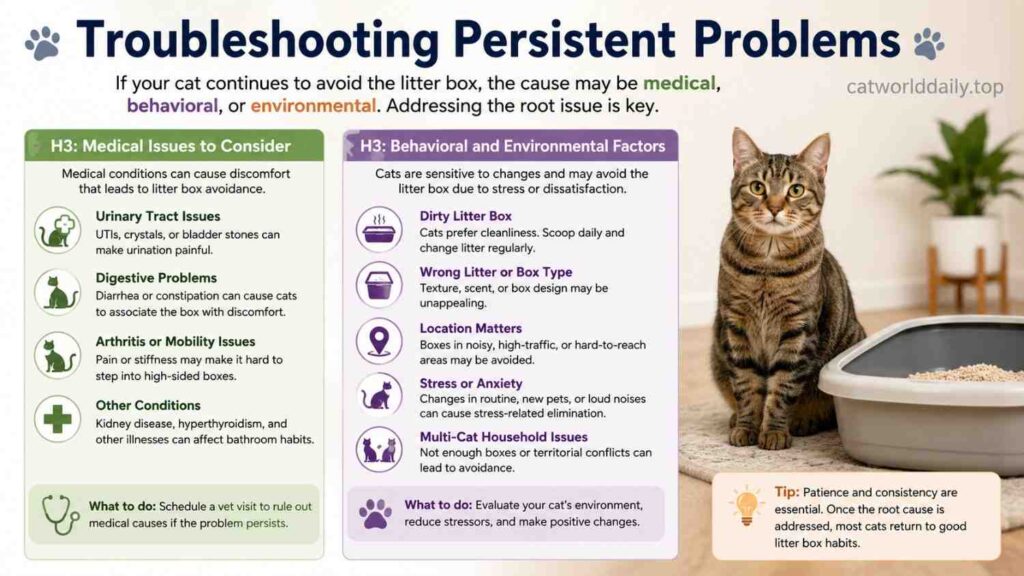
Troubleshooting Persistent Problems
Medical Issues to Consider
If training efforts fail despite proper setup and consistency, schedule a veterinary examination. Health conditions frequently contribute to litter box problems.
Potential medical causes include:
- Urinary tract infections
- Bladder inflammation
- Kidney disease
- Digestive disorders
- Arthritis
- Diabetes
Veterinary evaluation should always be the first step when a previously trained cat suddenly develops problems. (Petfinder)
Behavioral and Environmental Factors
Sometimes the problem isn’t physical but emotional. Cats can become stressed by changes in their environment. New pets, visitors, construction noise, or moving homes may disrupt litter habits.
Providing hiding places, maintaining routines, and minimizing stressors often improves behavior. If necessary, consult a feline behavior specialist for personalized guidance.
Many difficult cases improve dramatically once the underlying cause is identified.
Maintaining Long-Term Litter Box Success
Cleaning and Hygiene Practices
Long-term success depends on maintaining a clean and comfortable environment. Scoop waste daily and perform complete litter changes according to the manufacturer’s recommendations.
Regular cleaning reduces odors, discourages bacteria growth, and keeps your cat comfortable. Consistency matters just as much after training as it does during training.
A clean litter box communicates that this area remains safe and appropriate for elimination.
When to Upgrade or Change the Setup
As cats age, their needs change. Kittens outgrow small boxes, while senior cats may require lower sides and easier access. Periodically evaluate whether your setup still meets your cat’s needs.
If your cat begins hesitating, missing the box, or showing discomfort, consider upgrading equipment or adjusting placement. Small changes can make a significant difference.
Successful litter box training is not a one-time event. It is an ongoing partnership between you and your cat.

Conclusion
Learning how to train a cat to use a litter box fast is often much easier than people expect. Cats naturally prefer clean, designated elimination areas, and their instincts work in your favor. By choosing the right litter box, selecting cat-friendly litter, maintaining cleanliness, and using positive reinforcement, you can help your cat develop reliable habits quickly.
The secret is creating an environment that feels natural and comfortable. When cats have easy access to a clean, quiet, and inviting litter box, they usually do the rest themselves. Stay patient, avoid punishment, and focus on consistency. Before long, litter box training will become just another successful part of life with your feline companion.
FAQs
1. How long does it take to litter train a cat?
Most cats begin using a litter box within a few days, while complete consistency may take one to four weeks depending on age and previous experiences.
2. Why is my cat peeing outside the litter box?
Possible causes include dirty litter boxes, stress, unsuitable litter, poor box placement, or underlying medical conditions.
3. What is the best litter for training a kitten?
Unscented, fine-textured litter is often preferred. Many veterinarians recommend non-clumping litter for very young kittens.
4. Should I use a covered litter box?
Most cats prefer open litter boxes because they offer better visibility, ventilation, and easier access.
5. How many litter boxes should I have?
Experts recommend one litter box per cat plus one extra to reduce competition and encourage consistent use. (Petfinder)